
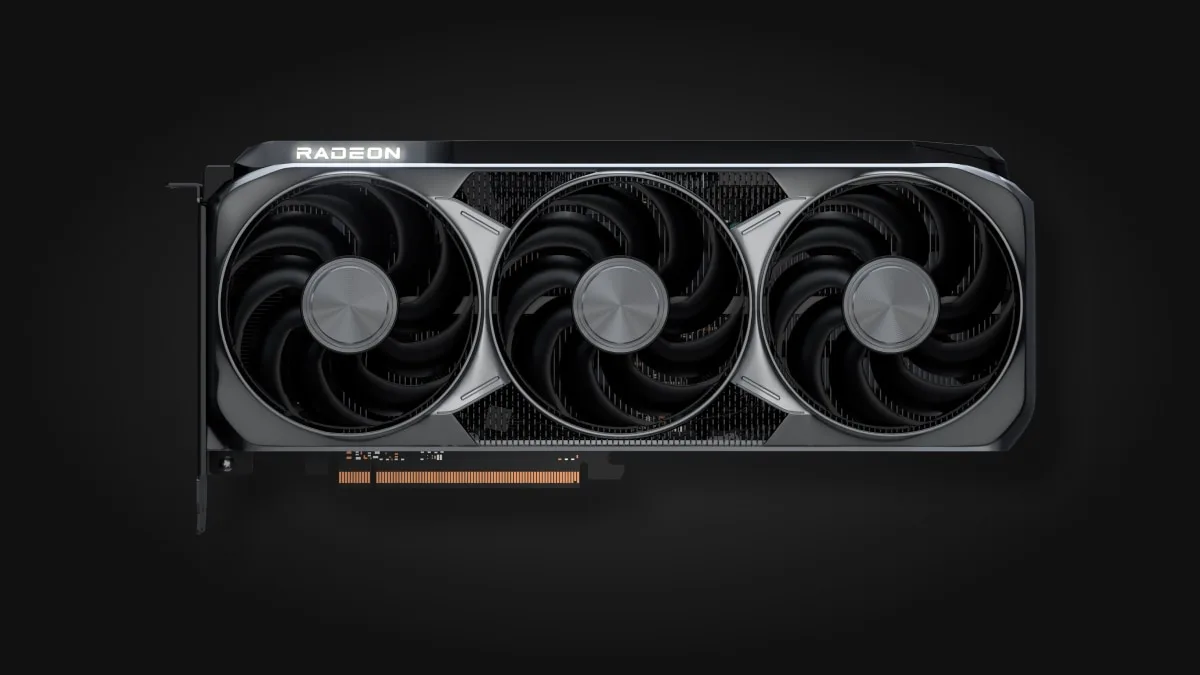

"Best graphics card" and "best graphics card for 4K" are two different questions, and most buying guides answer the first one while pretending they answered the second. Resolution changes what actually matters in a GPU: VRAM capacity stops being a spec-sheet footnote and starts being the thing that decides whether textures load correctly, ray tracing moves from "nice if you can afford it" to something a growing number of 2026 releases simply require, and the card that's the smart buy at 1440p is frequently the wrong buy at 4K even at the same price. The anchor for the numbers below is Gears of War: E-Day, The Coalition's October 6 release — a genuinely useful benchmark target because it has a full, official PC spec sheet and because it's one of the clearest examples yet of ray tracing stopping being optional: E-Day requires a hardware ray-tracing-capable GPU just to launch, regardless of resolution or settings. That makes it a sharper test of "is this card actually ready for 2026" than a game where RT is just a checkbox you can leave unticked.
Gears of War: E-Day's Official PC Requirements
| Spec | Minimum (1080p, 60fps) | Recommended (1440p, 60fps+) | Ultra (4K, 60fps+) |
|---|---|---|---|
| CPU | AMD Ryzen 5 2600X / Intel Core i5-10400 | AMD Ryzen 5 5600 / Intel Core i5-11600K | AMD Ryzen 7 7800X3D / Intel Core i7-14700K |
| GPU | GeForce RTX 2060 / RTX 5050, Radeon RX 6600 / RX 9060 (6GB VRAM) | GeForce RTX 3060 Ti / RTX 5060, Radeon RX 6700 XT / RX 9060 XT (8GB VRAM) | GeForce RTX 5070 Ti, Radeon RX 9070 XT (12GB VRAM) |
| RAM | 12 GB | 16 GB | 16 GB |
| Storage | 115 GB SSD | 115 GB SSD | 115 GB SSD |
| OS | Windows 10 64-bit 22H2 | Windows 11 64-bit 25H2+ | Windows 11 64-bit 25H2+ |
| Ray tracing | Required — hardware RT support is mandatory at every tier, not optional | Required | Required |
That last row is the one worth sitting with. E-Day doesn't offer a non-ray-traced fallback path the way most games with RT options do — the minimum-tier RTX 2060 and RX 6600 are both genuine RT-capable cards from a generation back, and that's a deliberate floor, not an oversight. Any GPU shopping list that still includes a non-RT card as a "budget option" in 2026 is shopping for 2021. The sections below use E-Day's Recommended and Ultra tiers as the dividing line between a 1440p card and a 4K one, because that's exactly the split The Coalition itself drew.
The Market You're Actually Shopping In
GPU prices in October 2026 are not back to normal, and the shortage has shifted shape rather than ending. It's no longer primarily a GPU-chip supply problem — it's a GDDR and DRAM memory problem, with memory now accounting for a large share of a graphics card's total cost, squeezed by the same AI-datacenter memory demand that's been driving up system RAM prices all year. The practical result: the RTX 5070 is currently running roughly 40–46% above its $549 MSRP at US retail, the RTX 5080 has been pulled from Nvidia's own store entirely and is trading at over double its $999 MSRP where it's available at all, and the RX 9070 XT — AMD's best value card a year ago — is now selling around $750 against a $599 launch price. None of this is a regional fluke or a single retailer gouging; it's the real street market, and it means every tier below costs more than the card's MSRP would suggest. Shop the actual price, not the number printed on the box three years ago.
VRAM: The Spec That Actually Decides 1440p vs. 4K
Raw shader performance gets the benchmark-chart attention, but VRAM capacity is the spec that most directly maps to resolution, and it's worth understanding in plain terms before picking a tier:
- 8GB is now a 1080p-to-entry-1440p ceiling, full stop. It's E-Day's own Recommended-tier VRAM figure, and it's enough for 1440p at High settings in most current games — but ray tracing eats VRAM for the BVH (bounding volume hierarchy) data structure the GPU builds each frame to calculate what's reflecting what, and an 8GB card with RT switched on at 1440p is frequently reaching the edge of its budget rather than cruising inside it.
- 12GB is the real floor for 1440p with ray tracing on, or for 4K without it. It's also the exact figure E-Day's own Ultra tier names for its RTX 5070 Ti/RX 9070 XT recommendation — not a coincidence, but a reflection of what a current ray-traced open-world-adjacent shooter actually needs headroom for.
- 16GB+ is the number worth targeting for 4K with ray tracing, because 4K textures are roughly four times the pixel count of 1080p ones, and a card that's merely fast but VRAM-constrained is the one most likely to stutter — textures dropping to a lower-resolution version mid-scene, or data constantly swapping across the PCIe bus — rather than simply rendering fewer frames per second. A slower 16GB card frequently ages better than a faster 8GB or 12GB one at the same price, because the VRAM wall doesn't get more forgiving over a card's lifespan; it gets less.
1440p: Budget Tier — RTX 5060 8GB vs. RX 9060 XT 8GB/16GB
At the entry 1440p price point, the RTX 5060 (8GB, ~$420–$460 street against a $299 MSRP) and AMD's RX 9060 XT both clear E-Day's Recommended GPU tier with room to spare for 1080p and most of 1440p. The meaningful decision here is which version of the 9060 XT: it ships in both 8GB and 16GB configurations at a real price gap, and the 16GB card is worth the premium specifically because it's the one that won't hit a VRAM wall the moment you turn ray tracing on at 1440p. The RTX 5060's advantage is DLSS 4 and stronger ray tracing throughput per dollar than AMD fields at this tier; the 9060 XT 16GB's advantage is capacity that ages better once a game's texture budget — like E-Day's — turns out to need more than 8GB holds. Running E-Day itself on either card at this tier means 1440p at Recommended-equivalent settings with ray tracing on but not maxed; treat RT reflections and shadows as the two features worth keeping, and global illumination as the one to drop first if frame rate dips.
1440p: Mid Tier / Entry 4K — RTX 5070 Ti vs. RX 9070 XT
This is the tier that actually matches E-Day's Ultra GPU recommendation, and both cards here are the ones The Coalition itself names. The RTX 5070 Ti (16GB, ~$1,100–$1,250 street against a $749 MSRP) gives you Nvidia's stronger ray tracing hardware and the full DLSS 4 stack including multi-frame generation, which matters in a cover shooter like E-Day where smoother perceived motion during fast peeks and slides has a real, if secondary, benefit. The RX 9070 XT (16GB, ~$750–$800 street against a $599 MSRP) trades a meaningful chunk of that ray tracing throughput for a real price advantage and strong raw rasterized performance — the better pick if you mainly want a locked 1440p frame rate and are willing to run E-Day's ray tracing settings one notch below Ultra to get it. Both cards carry enough VRAM headroom to run native 1440p with RT on, and both are legitimate entry points into 4K using DLSS or FSR upscaling rather than native rendering — just don't expect native 4K Ultra RT from either without dropping frames you'll notice.
4K: High-End Tier — RTX 5080 vs. the AMD Gap
At native 4K with E-Day's full ray tracing suite running, the RTX 5080 (16GB) is the strongest option that isn't flagship-priced, and Nvidia's RT hardware advantage widens specifically as more RT features stack on top of each other at once — exactly E-Day's situation, since RT isn't a toggle here but a baseline requirement layered with additional reflection and GI settings on top. The honest problem is availability and price: the 5080 has been pulled from Nvidia's own store and is trading at more than double MSRP where it can be found at all, which makes it a genuinely hard recommendation to make with a straight face in October 2026 regardless of how good the card is on paper. AMD doesn't currently field anything meaningfully above the RX 9070 XT, so for 4K specifically, AMD's practical answer right now is "lean harder on FSR upscaling with the 9070 XT" rather than a true native-4K flagship competitor. If you're buying for native 4K Ultra RT today, the 5080 is the right card and a bad market to be buying it in; if that combination isn't tolerable, the 5070 Ti at 4K with DLSS Quality upscaling is the more realistic path to the same visual target.
A Note on the RTX 5090
The RTX 5090 is, on pure benchmarks, the fastest consumer GPU that exists right now, and it's also the card most worth skipping in this market. At $5,000–$8,000+ against a $1,999 MSRP, it's not a 4K-gaming purchase anymore — it's a different category of spending entirely, and nothing about E-Day or any other current release asks for headroom beyond what the RTX 5080 or RX 9070 XT already provide. Buying the 5090 today buys a bigger number on a benchmark chart, not meaningfully more of what current games are actually built to show you.
Ray Tracing Settings Worth Understanding, Not Just Toggling
Because E-Day makes hardware RT mandatory rather than optional, its individual ray tracing settings are worth knowing in more detail than "on or off." Ray Traced Reflections carry a genuine gameplay dimension beyond the visual one — in a cover shooter with glass, water, or polished metal surfaces, a reflection can expose an enemy's position or flanking angle a half-second before you'd see them directly, which is a real tactical edge, not just a prettier frame. Ray Traced Global Illumination is the most expensive single setting in most RT suites and the one worth dropping first on an 8–12GB card if frame rate is the bottleneck; it changes how light bounces around a scene, which looks noticeably better but rarely changes whether you win a firefight. Shadow quality and ambient occlusion, whether ray traced or the older screen-space methods, sit in between — worth running at a mid setting on any card rather than maxing them at the cost of the two settings above that actually matter more.
Settings That Cost More Than They're Worth
Motion blur is worth turning off on every tier in this guide. It costs frame time and actively blurs the fast peripheral movement — an enemy strafing at the edge of your screen — that a cover shooter depends on you reading quickly. Film grain and chromatic aberration are purely cosmetic post-processing passes with zero gameplay upside and a real, if small, frame rate cost; there's no tier where leaving them on is the right call. Render resolution should stay at 100% before reaching for DLSS or FSR — dropping it directly costs target clarity at range, which upscaling recovers far more of than a flat resolution cut does, at a smaller visual cost on current-generation DLSS 4 and FSR 4.
Bottom Line
1440p and 4K aren't the same purchase scaled up — they're different VRAM requirements, different ray tracing budgets, and increasingly, in a game like E-Day, a different hardware floor just to launch at all. Buy the RTX 5060 or RX 9060 XT 16GB if 1440p with selective ray tracing is the actual target and budget is tight; buy the RTX 5070 Ti or RX 9070 XT — the two cards E-Day's own Ultra tier names — if you want that game's full ray tracing suite at 1440p with real 4K-via-upscaling headroom; and buy the RTX 5080 only if native 4K Ultra RT is non-negotiable and you've made peace with a market where that card costs more than double its sticker price. Skip the RTX 5090 regardless of budget tier — nothing on the market in October 2026, E-Day included, asks for what it adds over the 5080's real-world performance.

Lee covers PC setup and optimization for Gamingonix, translating requirements and settings into what actually changes your performance.