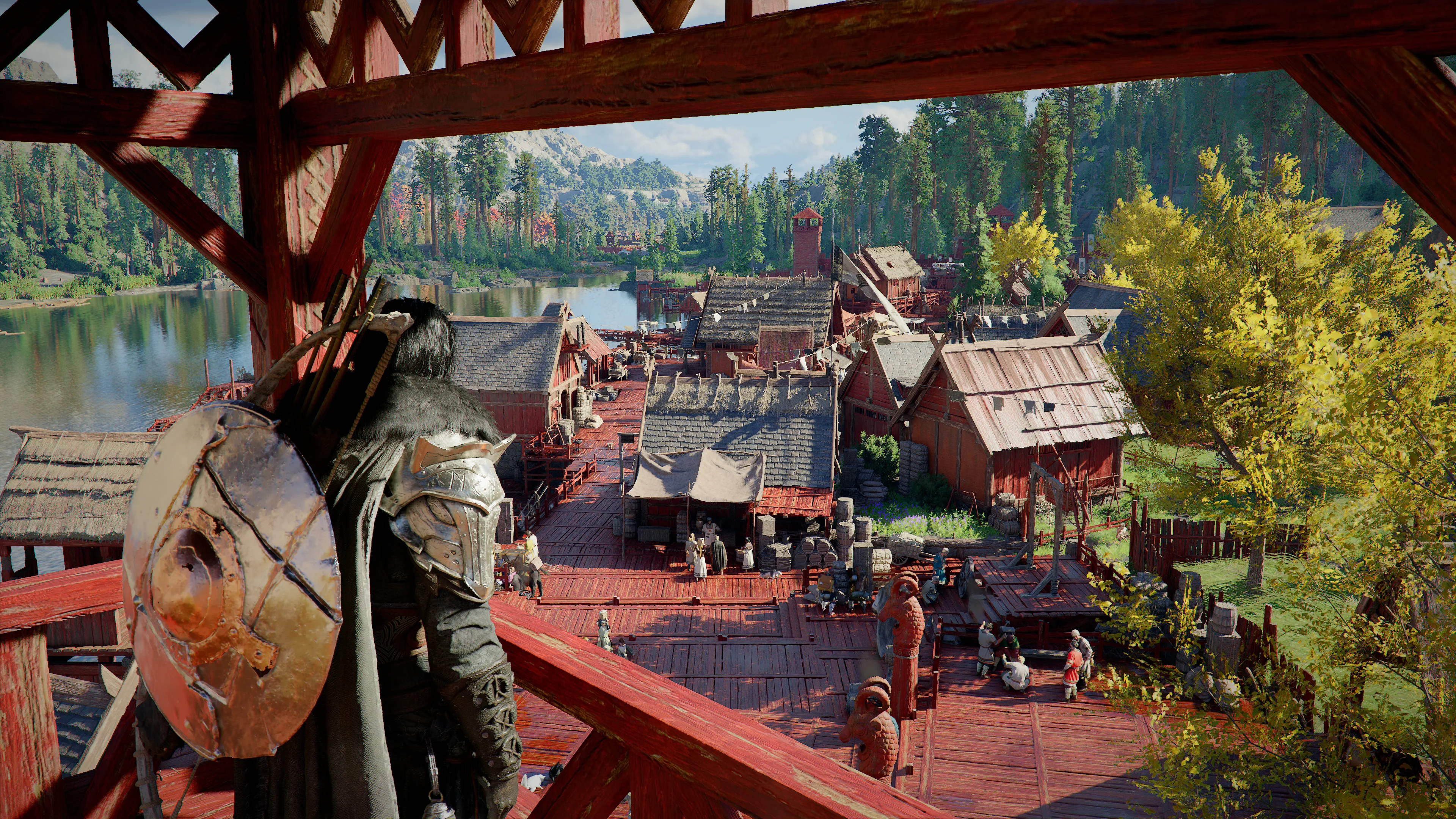

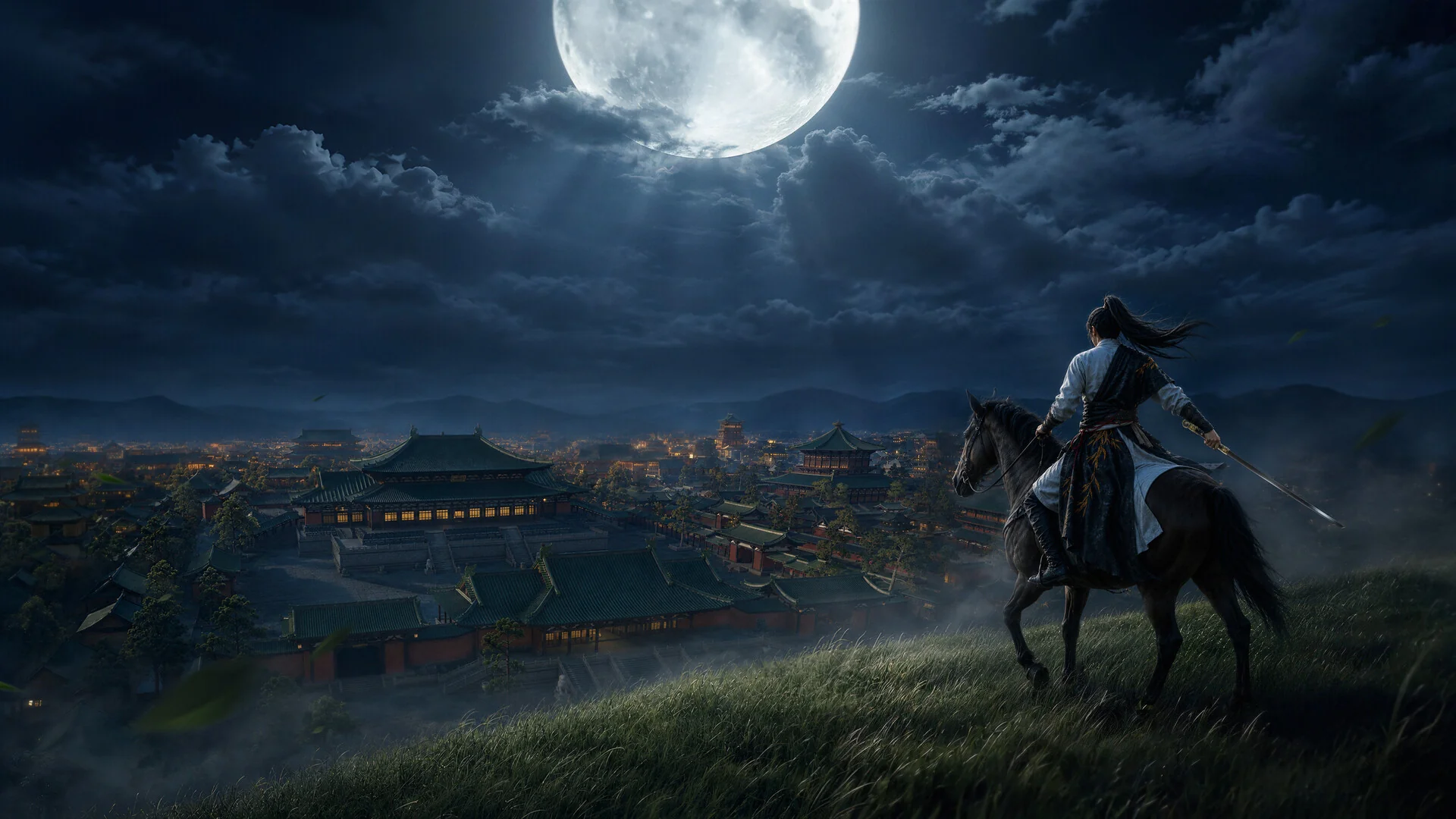
Wuxia has been a hard genre to translate into open-world design without collapsing into the same tower-and-icon checklist every other open world runs on. Where Winds Meet, from Everstone Studio and NetEase, gets the hardest part right: it builds the entire game around how good it feels to move, then — in the way of almost every free-to-play open world released this decade — can't resist piling nearly every other genre convention on top of that one good idea anyway. Since its worldwide PC and PS5 launch in November 2025, followed by a mobile release a month later, it's pulled in over 15 million players and held an 88% positive rating on Steam, and both of those numbers make more sense once you've actually run across a rooftop in it.
Movement Is the Actual Main Character
Qinggong — the wire-fu sprinting, wall-running and gliding at the heart of wuxia fiction — is tuned tightly enough that crossing the map is rarely the chore it is in most open worlds. Momentum carries between a sprint, a wall-run and a glide without a loading pause or an animation lock breaking the flow, and the world is laid out with that traversal in mind: rooftops chain together, cliff faces have deliberate handholds, and vertical shortcuts exist because the designers wanted you using them, not because a climbing puzzle needed padding. It's the rare case of a movement system built first and a map built around it second, rather than the other way around.
Twelve Weapons, and You Have to Earn Most of Them
Combat splits across twelve distinct weapon martial arts — sword, dual blades, spear, glaive, fan, umbrella and more — each with its own combo rhythm and utility, and switching mid-fight is where the system actually opens up. A staff user baiting a heavy attack into a dual-blade follow-up plays nothing like the same encounter fought in pure sword style. The catch, and it's a deliberate one: most of these styles aren't handed to you. They're locked behind Skill Theft, a stealth-infiltration questline unlocked through the Peace Bell Tower storyline, which means learning a new weapon is as much a heist mission as a menu unlock. It's a clever way to make martial arts progression feel diegetic instead of just another skill tree — when the stealth sections work.
Two Regions, Two Very Different Arguments for the World
Qinghe's grasslands and Kaifeng's walled city are built as genuinely different arguments for what an open world can be — one open and pastoral, the other dense and vertical — and the strongest points of interest in both connect to real character writing rather than existing purely as map clutter. That said, this is also where the genre's worst habit creeps back in: Where Winds Meet doesn't so much avoid side-activity bloat as bury you in it, layering minigames, investigation quests, and systemic sidebars on top of the open world until the game starts to feel less like a wuxia story and more like a checklist of every mechanic NetEase could fit into one client. Some of it lands — a Kaifeng deduction quest that has you gathering witness clues to track down a hidden dojo is genuinely good detective writing. A lot of it is filler wearing a martial-arts costume.
Where It Stumbles
The stealth infiltration missions gating those weapon unlocks are inconsistent — some are tense, well-paced heists, others are clumsy enough that you'll wonder why a game this confident about its combat felt the need to gate combat behind not-combat. The free-to-play model advertises no pay-to-win mechanics, and on the core combat and traversal that claim mostly holds — but the sheer number of overlapping systems, currencies and minigames makes it hard to tell at a glance which ones are actually optional and which are quietly gating content behind time or spending. Neither issue undoes the moment-to-moment experience, but they're the difference between a very good open world and a genuinely focused one.
Verdict
Where Winds Meet understood exactly what makes wuxia fiction feel good to inhabit and built its best system — movement — entirely around that instinct. It just didn't trust that instinct enough to stop there, and the result is a game you'll recommend for the traversal and the combat while quietly telling a friend to ignore half of everything else it throws at you. The core is genuinely excellent. It's just wrapped in more game than it needed to be.

Jack reviews games for Gamingonix, judging every release on its own terms and telling you plainly whether it earns your time.