
Phantom Blade Zero has been a trailer for six years before it was ever a game you could buy, and that's a dangerous amount of runway for any studio to give itself. S-Game first teased this thing back in 2020 with a tech demo that looked too fluid to be running on anything but a highlight reel, then spent half a decade feeding that promise with Summer Game Fest cuts and a PlayStation State of Play slot, each one sharper than the last, each one a little more curated than a full playthrough would ever let it be. The game finally shipped worldwide on October 29, 2026, on PS5 and PC, fifty days later than its original September 9 date because S-Game pulled it back for polish — a decision that, having now played the whole thing start to finish, looks like exactly the right call. This is a game that earns its reputation as one of 2026's best action titles in its best moments, and loses a little of that shine whenever it stops swinging a blade and starts trying to tell you why.
Sha-Chi Is the Best New Combat Idea in the Genre This Year
Strip away the Wulin set dressing and Phantom Blade Zero's whole identity lives in one orange gauge sitting under Soul's health bar: Sha-Chi, a resource both you and every enemy on screen are spending and regenerating in real time. It's not just your stamina bar wearing a new name — it's shared currency. Light attacks build your own Sha-Chi cheaply and chain into the combos the game actually wants you running; heavies, specials, and holding a guard too long burn through it fast; and the moment you empty an enemy's gauge, their stance breaks and the screen more or less hands you a free punish. The genius of the system is that it reads both directions. A mid-boss who's two heavy swings away from an empty gauge telegraphs that vulnerability in posture and animation speed, and learning to see it is the actual skill ceiling of this game, not memorizing a dodge-roll timing window.
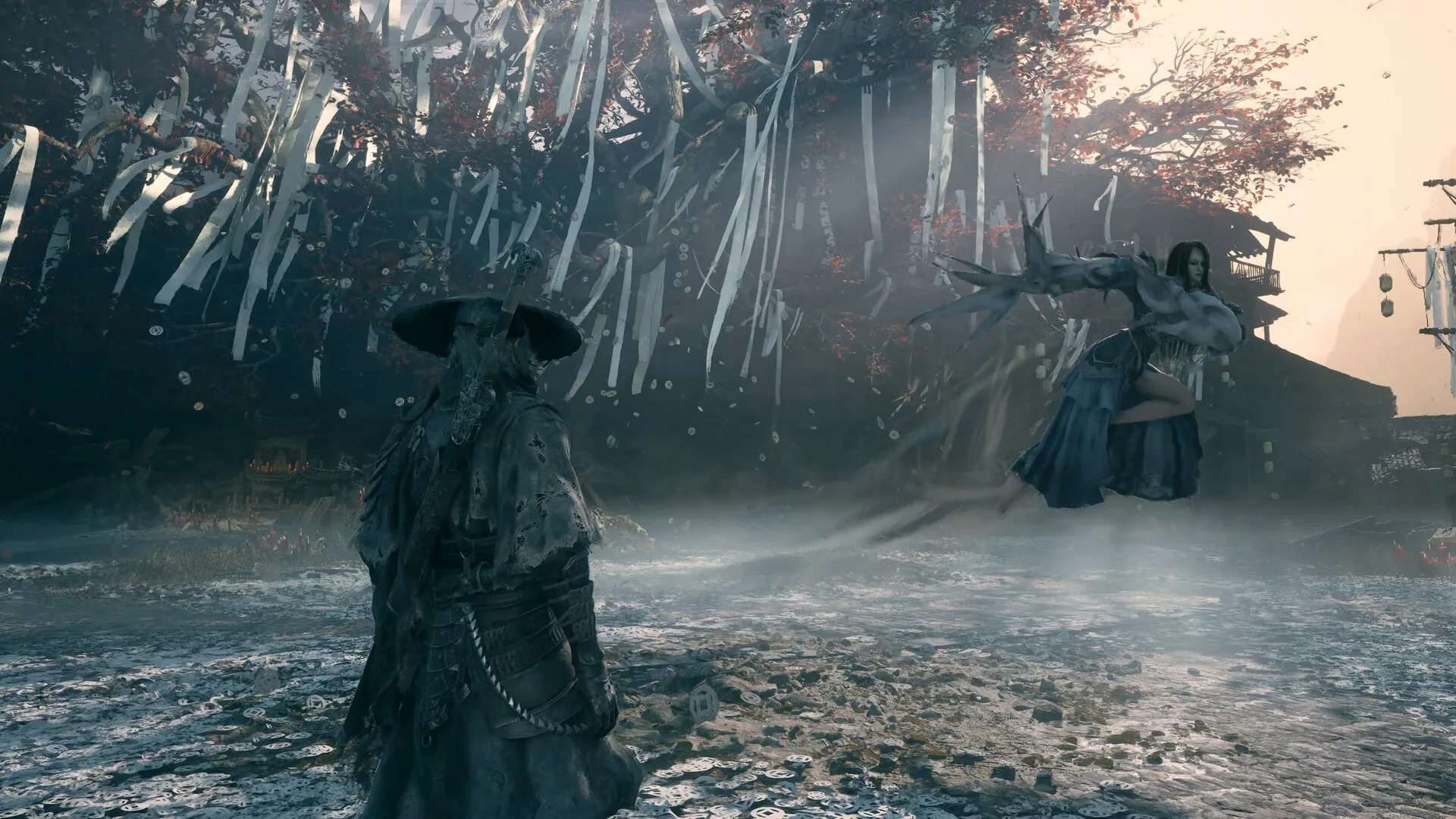
What makes it sing rather than just function is how fast everything resolves. S-Game has been upfront that they were chasing Ninja Gaiden's tempo rather than a Souls game's deliberate weight, and over forty-plus hours that pitch holds up — fights here are measured in seconds of decision-making, not the long, patient stance-offs a FromSoftware boss demands. Perfect parries don't cost you any Sha-Chi at all, which turns the highest-skill play into the cheapest one, a reward structure that's simple to explain and genuinely satisfying to execute once your hands catch up to it. Soul carries two primary weapons and two secondary Phantom Edges at once, and swapping between any of the four mid-combo doesn't just vary your moveset — it actually replenishes a chunk of Sha-Chi, which means the deepest combat tech in the game isn't a hidden input string, it's just remembering to switch tools before you're empty. Across the full roster of roughly 30 primary weapons and 25 Phantom Edges, the differences are not cosmetic. A pair of twin blades reads like a different game from a war axe — faster Sha-Chi generation, shorter reach, built for weaving between three enemies at once, where the axe trades all of that for haymaker damage and stance-break power that turns a single heavy swing into the fight-ending blow. I spent the first fifteen hours married to a dao-and-chain-hook combo and the back half of the game slowly falling for a glaive that nobody warned me was this good.
66 Days Is a Clock You Can Actually Hear Ticking
The structure wrapped around that combat is a straight assassination-and-betrayal plot, but it's told at a pace that mostly earns its stakes. Soul is an elite killer for an organization called The Order, framed for a murder he didn't commit, left for dead, and saved by a mysterious healer whose cure buys him exactly 66 days before it fails. The game tracks that number visibly, and whether or not you engage with the optional 66 Days difficulty mode — where every death actually burns one of those days off a permadeath-adjacent clock — just knowing the number exists while you're playing Pathbreaker or Wayfarer changes how you read every side detour. Wulin's rival factions, the folk-horror creatures haunting its back roads, and the slow unraveling of who actually set Soul up are all serviceable wuxia plotting, elevated by a cast of handlers and rivals who get just enough screen time to register as people rather than quest-givers. The back third of the campaign, once the game commits to who framed Soul and why, is genuinely gripping — it's the front third that drags, spending more time establishing Wulin's politics than most players will have patience for before the combat system has had a chance to hook them.
Boss Design Is Where the Hype Was Most Deserved
If there's one place the pre-launch previews undersold the final game, it's the bosses. The State of Play demo sections showed off maybe four marquee fights in curated isolation; the full campaign has somewhere north of a dozen, and the best of them are genuinely some of the sharpest choreography the genre has produced this generation. A mid-game duel against a rival assassin named Yan Feng — fought across a burning teahouse as the floor literally gives way beneath both combatants — reads less like a fight you're grinding through and more like a kung-fu film sequence you happen to be steering, Sha-Chi exchanges snapping back and forth with a rhythm that neither party fully controls. The late-game creature fights lean harder into the kungfupunk half of the aesthetic — steam-vented, body-modified horrors that break the Sha-Chi rhythm with grab attacks and armor phases that force you to actually change weapons mid-fight rather than just button through it. Not every boss clears that bar; a couple of mid-game encounters are reskinned mini-boss templates padded out with extra health, the clearest sign of a 50-day delay that bought polish for the marquee fights without stretching to cover every single one of them.
Performance Holds Up Better on PS5 Than Early Fears Suggested
A six-year-hyped, technically ambitious Unreal Engine 5 game carries obvious risk of launching into a performance mess, and Phantom Blade Zero mostly dodges that fate. On PS5, Performance Mode targets 60fps and holds it through the vast majority of combat, with the expected dips into the mid-50s during the busiest multi-enemy set pieces and particle-heavy boss finishers — noticeable if you're looking for it, never bad enough to cost you a parry window. Quality Mode's 30fps cap with denser foliage and sharper lighting in Wulin's outdoor stretches is the better way to experience the game's best environmental art, but I'd argue Performance Mode is the correct default given how much the combat depends on reading fast animation tells. PC is the stronger platform overall if your rig can support it — frame generation and DLSS/FSR support get well-equipped systems comfortably past 100fps, and mouse-and-keyboard input actually makes the fastest weapon-swap tech a little easier to execute cleanly than on a controller, though S-Game clearly designed the combat's feel around a gamepad first.
Launch Week Reaction Has Been Unusually Settled
Three days of embargo before launch put early critic scores in a tight, high band — Metacritic in the high 80s on both platforms, OpenCritic in the low 90s — and a week of community play hasn't meaningfully pulled that apart the way some high-hype launches do. The Steam and PlayStation discourse since October 29 has mostly centered on exactly the two things this review landed on independently: near-universal praise for the combat feel, and more mixed takes on whether the story's first act asks for too much patience before the plot actually clicks into gear. The PS5 timed exclusivity window — no Xbox version arriving before October 2027 at the earliest — has generated the predictable platform-war noise on social media, but it hasn't touched the actual critical conversation about the game itself, which has stayed remarkably civil for a release this anticipated.
Verdict
Phantom Blade Zero is proof that six years of trailers can actually undersell a game rather than oversell it. The Sha-Chi system is the best new combat idea an action-RPG has introduced in years — a shared, readable resource that turns every fight into a real-time negotiation rather than a memorization test, backed by a weapon roster deep and distinct enough to reward genuinely switching playstyles mid-campaign rather than just mid-run. The best boss fights are genre-best choreography, and the 66-day countdown gives an otherwise familiar wuxia betrayal plot a clock you can feel ticking even when you're not on the permadeath difficulty. Set against that: a first act that spends too long on Wulin's politics before the hook lands, a handful of mid-game bosses that don't clear the bar the best ones set, and a PS5-exclusive launch window that's going to annoy a real portion of the audience for a full year regardless of how good the game is. None of that changes the core fact — this is the rare hyped-for-years game that plays better than its own trailers, and it's an easy recommendation for anyone who wants their action combat to actually ask something of them.
Pros:
- Sha-Chi is a genuinely new combat idea — a shared, readable resource that makes every fight a real-time read-and-react exchange rather than a memorized pattern
- An enormous, meaningfully distinct weapon roster (roughly 30 primaries, 25 Phantom Edges) that rewards switching tools mid-combo rather than picking a build once
- The best boss fights — Yan Feng's burning teahouse duel especially — are some of the sharpest action choreography the genre has produced this year
- The 66-day countdown gives real narrative weight to story pacing even outside the dedicated permadeath difficulty
- PS5 Performance Mode holds a largely stable 60fps through the vast majority of combat
Cons:
- The opening act over-invests in Wulin's factional politics before the combat and story both find their footing
- A handful of mid-campaign bosses feel like padded reskins next to the genre-best marquee fights around them
- Quality Mode's 30fps cap undercuts a combat system built around split-second animation reads
- The 12-month PS5 timed exclusivity locks out Xbox players from a game built to be this year's genre conversation-starter

Jack reviews games for Gamingonix, judging every release on its own terms and telling you plainly whether it earns your time.