
No other platform reviewed on this site has had a year like Roblox's 2026. It rolled out mandatory facial age-estimation just to let people chat, watched a single experience called Steal a Brainrot break the all-time concurrent player record for any video game on any platform, got sued by attorneys general in Texas, Nebraska, Arkansas, and Los Angeles County over child safety, and still posted 36% revenue growth in its Q2 earnings call while warning investors that bookings were about to fall off a cliff. Roblox isn't a game in any conventional sense — it's an operating system for other people's games, a currency, a chat client, an age-verification vendor, and a legal defendant, all running under one 18-year-old brand. Reviewing it means asking whether the platform underneath all of that noise is still worth the download, not whether any single experience on it is good.
The Games Are Still the Best Argument for the Platform
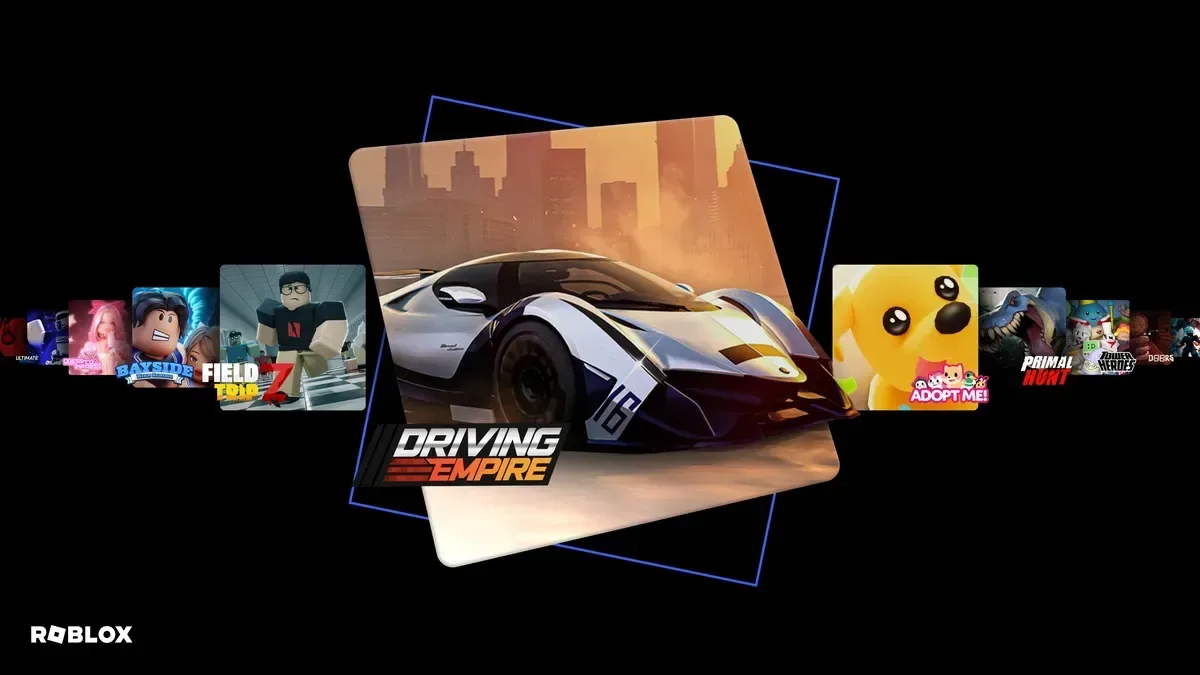
Strip away the corporate drama and Roblox's actual catalog in 2026 is arguably stronger than it's ever been. Steal a Brainrot, a base-defense game built around collecting and protecting meme-based "Brainrot" characters, hit 25.8 million concurrent players in late 2025 and is still one of the platform's biggest draws — a number no other game, on Roblox or anywhere else, has matched. Grow a Garden, the plant-and-harvest simulator that dethroned it briefly before losing the crown back, still sits around a million-plus daily concurrent players months after launch and has racked up more than 35 billion total visits. Brookhaven RP, the platform's evergreen roleplay sandbox, keeps pulling half a million concurrents on a game that's years old with no marketing push behind it. None of these are prestige productions. They're built by small teams or solo creators in Roblox Studio, and their staying power says something real about the platform: the tools are good enough that a game about hiding vegetables from thieves can out-draw most AAA live-service launches.
That variety is still Roblox's core pitch and its hardest thing to summarize in a review. On any given day the front page mixes obstacle courses, tycoon builders, horror escape rooms, fighting games, and full narrative RPGs, and the genuinely good ones — Doors, Blox Fruits, Adopt Me, and now this year's brainrot-and-garden wave — sit next to thousands of abandoned or half-finished experiments. Roblox's Discover algorithm has gotten better at surfacing the former over the latter, but it hasn't solved the platform's oldest problem: quality control is still entirely the community's job, not Roblox's.
Cube AI Is Quietly Lowering the Floor for Creators
The most consequential update most players will never notice directly is Cube, Roblox's in-house generative AI system. Cube 3D, an open-sourced foundation model trained on 1.5 million 3D assets, lets creators text-prompt basic meshes and avatar bundles instead of modeling them by hand, and February 2026's public beta pushed that further into "4D" generation — objects that come out already scripted with basic interactive behavior, not just static geometry. For a solo creator without an art background, that's a genuine barrier removed; for the marketplace as a whole, it's an accelerant on an already enormous flood of UGC accessories and knockoff experiences that makes the discovery problem above slightly worse even as it makes individual creation easier. Roblox is betting the volume gain is worth the noise. So far that bet looks reasonable rather than obviously right.
Age Verification Changed What "Playing Roblox" Means
This is the single biggest structural change to the platform since it introduced Robux, and it touches every account, not just kids'. Since January 2026, using any chat feature — text chat, voice chat, or the Party system — requires a facial age-estimation scan, handled by a third-party vendor called Persona: you record a short selfie video turning your head, an algorithm estimates your age band from it, and the video is deleted afterward rather than stored. Roblox sorts every account into one of six bands, from Under 9 up through 21+, and chat only works between users in the same or an adjacent band. As of June 2026, younger accounts got split further into Roblox Kids (ages 5–8, all communication off by default) and Roblox Select (ages 9–15, standard age-appropriate chat defaults), each capped to a narrower slice of the catalog.
Roblox's own numbers show the tradeoff plainly: the company's Q1 2026 earnings acknowledged the "aggressive push to enhance safety" would suppress growth, and daily active users dropped from roughly 144 million in Q4 2025 to 132 million in Q1, before climbing back to 123 million by Q2 against tougher year-over-year comparisons. Some of that decline is Russia's platform block taking effect in December 2025; a real chunk of it is players — adults included — declining to hand over a facial scan just to type in a game lobby. As a safety measure, it's a defensible, arguably overdue response to a real problem. As a user experience, it's a genuine friction point that changes what casually inviting a friend into a game looks like now, and it hasn't fully settled which is the bigger factor in the user numbers.
The Lawsuits Aren't a Footnote
It would be dishonest to review Roblox in 2026 without treating the legal situation as central rather than background noise. More than 180 lawsuits alleging the platform failed to protect children from predators have been consolidated into a federal multidistrict litigation in California, and state attorneys general in Texas, Nebraska, and Arkansas have filed their own suits this year accusing Roblox of not effectively separating adults from minors despite years of safety marketing. Roblox has already settled with Alabama ($12.2 million), Nevada, and West Virginia ($11 million) over related claims, and set aside $57 million in Q1 alone for settlements and proposals with other states. The age-verification rollout above is Roblox's direct, expensive answer to exactly this pressure, and it's a more serious response than the platform's history of moderation controversies had previously produced. Whether it's sufficient is a question courts and legislatures are actively still deciding, not one a review can settle — but any parent or player weighing "is Roblox still worth it" in 2026 should know this is a live, ongoing legal story, not a resolved one.
Robux and DevEx: The Economy Still Favors the House
The monetization loop hasn't fundamentally changed and still isn't generous. Robux runs the same familiar tiers — roughly $4.99 for 400, up to $19.99 for 1,700 — with the mobile app quietly delivering less currency per dollar than buying directly through a browser, since Apple and Google's platform cuts get passed straight to the player. On the creator side, Roblox takes a 30% cut of every UGC marketplace sale before a creator ever converts earnings to real money, and the Developer Exchange program still pays out at a base rate of $0.0038 per Robux — a verified adult creator can unlock a better $0.0054 rate on certain purchase types, but the standard rate hasn't moved in years despite Roblox's own bookings and creator payouts (over $1.5 billion distributed in 2025) climbing steadily. It's a system that works, in the sense that a genuine creator economy exists and some developers make real money, but it's structured so Roblox's cut comes off the top twice — once on the initial Robux purchase, again on the DevEx conversion back to cash — before a creator sees a dollar.
Verdict
Roblox in 2026 is a harder platform to give a clean recommendation to than it's been in years, and that's not really about the games — Grow a Garden, Steal a Brainrot, and the long tail of Studio-built experiences underneath them prove the creation tools and the discovery loop still produce genuinely massive, genuinely fun hits on a near-monthly cycle. It's everything wrapped around the games that's gotten heavier: a facial-scan requirement just to chat, a slowing user base that Roblox itself attributes partly to that requirement, and an unresolved wave of state lawsuits and a federal MDL alleging the safety problems run deeper than a scan can fix. None of that makes Roblox not worth playing — the catalog is too varied and too free to write off, and the age-verification system, friction aside, is a more serious safety response than the platform has ever made before. But it does mean going in with clear eyes: you're joining a platform that's actively rebuilding its trust and safety model in public, mid-lawsuit, and the version of Roblox you install today asks more of you — a face scan, patience with account restrictions, awareness of what your kids' account type actually limits — than the version that made this brand a household name.
Pros:
- Steal a Brainrot and Grow a Garden prove the platform's creation tools still produce record-breaking, genuinely fun hits built by small teams
- Cube 3D's generative AI tools meaningfully lower the barrier to entry for solo creators without art or scripting backgrounds
- Facial age-estimation and the Kids/Select account split are a real, substantive safety upgrade over Roblox's previous moderation approach
- Still free to download and play, with an enormous, constantly refreshed catalog across every genre
- Creator economy is real, with DevEx payouts crossing $1.5 billion distributed in 2025
Cons:
- Mandatory facial scanning to use chat is a genuine friction point that's already measurably shrunk daily active users in 2026
- More than 180 child-safety lawsuits are consolidated into an active federal MDL, plus separate state AG suits still unresolved
- Robux and DevEx still take a cut on both ends of the economy, and the base creator payout rate hasn't improved in years
- Discovery still surfaces a flood of low-effort or abandoned UGC alongside genuine hits, with quality control left to the community
- Buying Robux through mobile app stores still nets less currency than buying the same amount on the web

Jack reviews games for Gamingonix, judging every release on its own terms and telling you plainly whether it earns your time.