
Insomniac built its reputation on momentum — Spider-Man swinging between skyscrapers, Ratchet rift-jumping between planets, always moving, always a verb away from the next thing. Marvel's Wolverine throws that instinct out. There's no open world here, no grapple point to chase on the horizon. Logan walks into a room, the door locks, and something with claws of its own is waiting. Released September 15, 2026 exclusively on PS5 for $69.99, this is Insomniac's first game built around stopping, not moving — and a month of post-launch conversation has settled on a verdict that's more complicated than "another Insomniac hit." The combat is some of the most violent, physically convincing work the studio has ever shipped. The campaign wrapped around it, less so.
The Rage Meter Is the Whole Design Philosophy
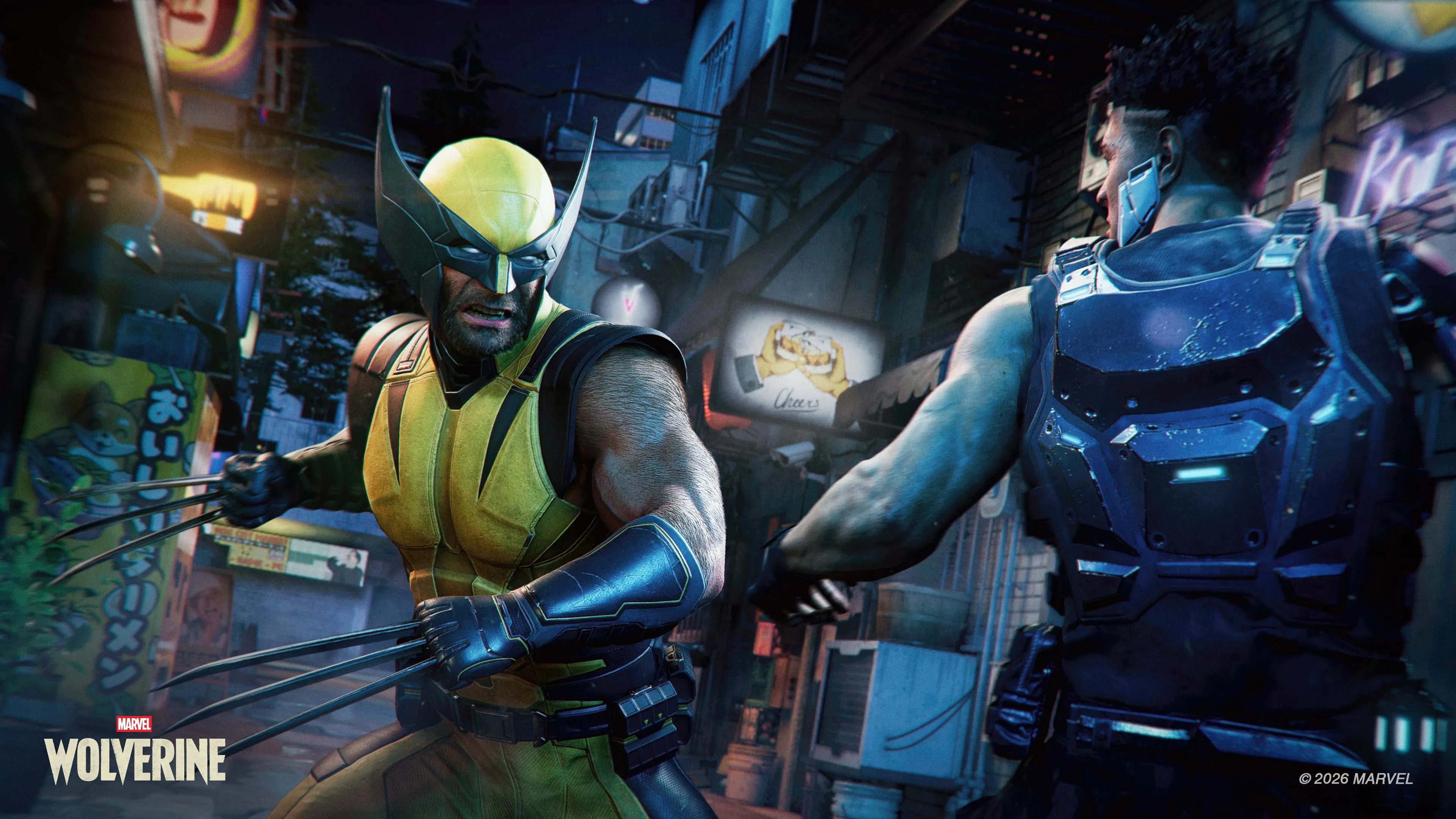
Strip away the claws and Wolverine is a surprisingly tight combat puzzle built around a three-tier Rage meter that fills as Logan lands hits and decays the moment he stops. Tier one activates his healing factor, meaning a "death" early in a fight is really just a stagger with a price attached rather than a reload. Tier two boosts combo damage, turning strings of light and heavy attacks into genuinely satisfying chains of dismemberment. Tier three triggers berserker rage: a short window where Logan is impervious to damage and can execute enemies outright, accompanied by the kind of screen-filling gore — severed limbs, exposed adamantium bone, enemies torn clean in half — that no other Insomniac game has attempted, because no other Insomniac protagonist heals from being disemboweled.
It's a smart system because it encodes Wolverine's whole comic-book identity into a single meter: he's scarier the longer a fight goes on, not weaker. The one real design complaint that's stuck across most reviews is that healing-factor activation is automatic rather than player-triggered — you don't choose to pop back up at zero health, the game does it for you, which flattens a moment that should feel like a conscious act of defiance into a scripted animation. It's a small thing, but it's the kind of small thing that separates a mechanic you perform from one that just happens to you.
A Linear Game That Knows Exactly What It's Cutting
Insomniac has been explicit that this isn't an open-world game, and the design backs that up: missions are self-contained corridors and arenas rather than a map full of icons, with no side quests to detour into. That's a legitimate, defensible choice for a character defined by tunnel-vision rage rather than Spider-Man's civic-minded sightseeing — Wolverine has no patience for collectibles, and the game doesn't pretend otherwise. The compromise is that a handful of larger locations, particularly the neon sprawl of Tokyo's Kabukicho district and the fictional island nation of Madripoor, open up into something closer to a contained sandbox, giving a few hours of genuine breathing room inside an otherwise corridor-shaped campaign.
The story riding on top of that structure sends an amnesiac Logan — three years removed from walking out on the black-ops mutant unit Team X — back into the field to investigate industrialist Bolivar Trask and his Reavers militia abducting displaced mutants, a trail that runs through the Canadian wilderness before landing in Tokyo and Madripoor. Troy Baker turns up as Nathaniel Essex, and Brett Gipson's take on Sabretooth gives Logan a physical rival worth the Rage meter existing in the first place. It's a serviceable spy-thriller skeleton for a character study, and the structure keeps the plot moving without ever detouring into filler — but "serviceable" is doing real work in that sentence. More on that below.
Liam McIntyre Is Doing the Heaviest Lifting
If there's one thing nearly every post-launch writeup agrees on, it's that Liam McIntyre's performance as Logan is the game's most reliable asset. He's gruff without tipping into parody, convincingly worn down by decades he can't fully remember, and genuinely frightening once berserker rage takes over — a performance that sells both the "soulful antihero" register and the "raging animal" register without the seams showing. The dream-sequence flashbacks into Logan's buried past, where the amnesia plot actually pays off, are where McIntyre gets the most room to work, and they're consistently the moments reviewers single out as the story's best material. It says something about the rest of the script that the character work is outpacing the plot built to deliver it — Essex and Trask function fine as antagonists, but the broader narrative leans on familiar betrayal beats and rarely surprises, even when the voice work convinces you it should.
Twelve Hours of the Same Fight
The thing that's kept Marvel's Wolverine out of the high-80s Metascore range its Spider-Man predecessors lived in is repetition, and it's a fair complaint. The core moveset — light attacks, heavy attacks, a dodge, and the Rage-fueled finishers — barely evolves between the first mission and the twelfth, and the Reavers' mercenary roster doesn't introduce enough new enemy types to force new approaches to the same combos. A roughly 12-to-15-hour main campaign (closer to 15-20 hours chasing every Whiskey Bottle collectible and Nightmare Trial) is the right length for the amount of story on offer, but it's a long runway for a combat system that peaks in its first few hours and never meaningfully builds on itself after. The brutality stays satisfying in isolated encounters; stacked back to back for twelve hours, it starts to feel like the same fight wearing different scenery.
On the technical side, Insomniac made Performance Mode the default for the first time in a studio game — 60fps with ray tracing active on a base PS5, no fidelity-mode trade-off required to get both smooth combat and reasonably lit environments. It's a genuine step up in how the studio balances its two usual modes, and it means nobody has to choose between a readable framerate and a game that looks the part during its more theatrical executions.
Verdict
Marvel's Wolverine lands at a 77-78 Metascore for a reason that holds up under scrutiny: it's a game that nails the specific, narrow thing it's about — Logan as a healing, raging, increasingly unstoppable force across roughly a dozen hours of brutal one-on-one and small-group combat — and doesn't do much else. The Rage meter is a genuinely clever translation of a character trait into a combat system, McIntyre's performance is worth the price of admission on its own, and the decision to go linear instead of open-world is the right call for this character rather than a budget-driven shortcut. But the moveset's refusal to grow past its first few hours, a story that plays its betrayals and villains safe despite strong voice work, and an amnesia plot that resolves more through dream sequences than present-tense stakes keep this from matching the Spider-Man trilogy it's sharing a universe with. This is the best Wolverine has ever controlled in a game. It's not the best story Insomniac has told with one.
Pros:
- The three-tier Rage meter turns Logan's healing factor and berserker fury into a genuinely clever, character-appropriate combat system
- Liam McIntyre's performance — gruff, soulful, convincingly feral — is the game's single best asset, especially in Logan's dream-sequence flashbacks
- Performance Mode running 60fps with ray tracing as the default on base PS5 is a real technical step forward for the studio
- A deliberately linear structure suits Wolverine's one-track-mind better than an open world would have
Cons:
- The core moveset barely evolves from the first mission to the twelfth, and enemy variety doesn't force new tactics
- The script plays Trask and Essex's betrayals safe, leaning on familiar beats despite a strong voice cast
- Automatic healing-factor activation removes player agency from what should be a defiant, chosen moment
- A 12-to-15-hour campaign is long enough to make the repetition the dominant memory of the back half

Jack reviews games for Gamingonix, judging every release on its own terms and telling you plainly whether it earns your time.