
Every other review on this site is written after the credits roll. This one can't be, and pretending otherwise would be the least honest thing I could do with it. Grand Theft Auto VI releases November 19, 2026, on PlayStation 5 and Xbox Series X|S, and as of this writing Rockstar has not let a single outside journalist, streamer, or reviewer touch a controller. The closest anyone's gotten is a hands-off session at Rockstar North in Edinburgh this past July, where outlets like IGN and the New York Times watched a Rockstar staffer play while they took notes. So no, this isn't a verdict on how GTA 6 plays at 2 a.m. after forty hours. It's a hard look at what Rockstar has actually shown and said — two trailers, one Netflix extended-look event, one on-record systems interview — measured against what a $2 billion-plus, seven-years-in-development open world needs to deliver to justify the wait. Score included, with the asterisk that it's an assessment of the pitch, not the execution, and this page gets rewritten the week the game is actually in hands.
Jason and Lucia: A Switching System That's Trying to Be More Than a Gimmick
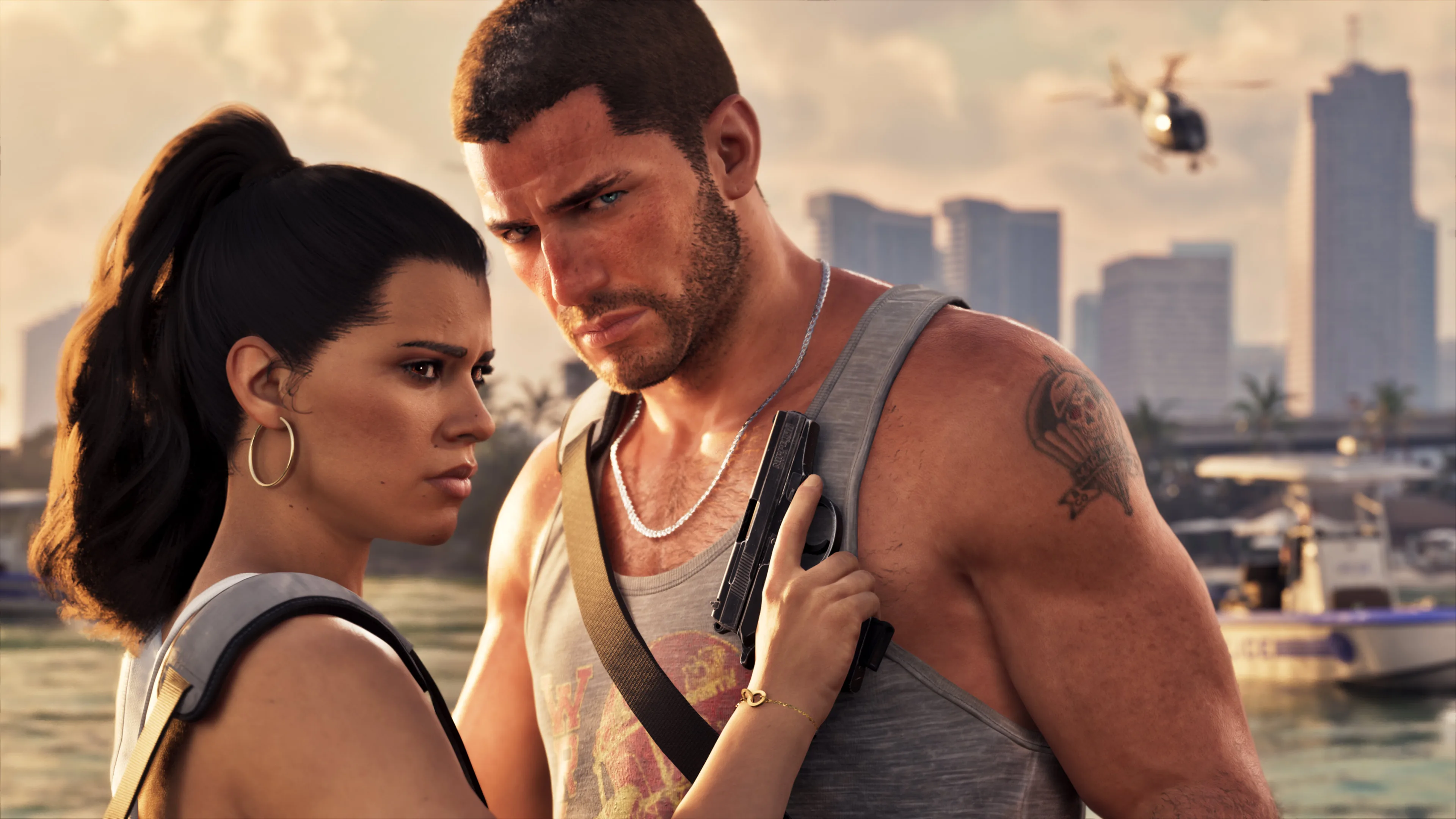
GTA V's three-protagonist switch was a camera trick dressed up as a mechanic — flip between Michael, Franklin, and Trevor mid-heist for spectacle, and otherwise treat them as three separate save files that happened to share a map. Rockstar's own on-record interview about GTA 6's systems describes something with more teeth: Jason Duval and Lucia Caminos can be played together as a couple, with the inactive partner acting as real AI backup — covering an angle, calling out a threat, driving while the other shoots — or split apart and controlled independently when the story calls for it. The studio has also confirmed the two can't be swapped at will during every mission; some sequences lock you to one character deliberately, because Rockstar's design team has said forcing a swap mid-scene would read as "unnatural" for whatever beat is playing out. That's a real design opinion, not a technical excuse, and it's the right one — GTA V's switching often felt like a toy bolted onto missions that didn't need it.
What's more interesting is what's layered underneath the switch: Rockstar has confirmed lifestyle systems tied to both characters, where eating, working out, and going without sleep visibly change their weight, build, and how tired they look, and a relationship layer between Jason and Lucia that the studio has explicitly compared to something deeper than Red Dead Redemption 2's honor system. If that holds up, it's the first time this series has treated the bond between its leads as a mechanic with consequences rather than a story beat you watch happen to two silent protagonists. It's also the part of the pitch I'd bet money gets flattened by the third act into a handful of binary choices — Rockstar's writing has always been sharper at dialogue than at systemic consequence, and "the relationship carries repercussions" is an easy sentence to say in an interview a year before ship.
Leonida Is the Pitch, Not Just Vice City
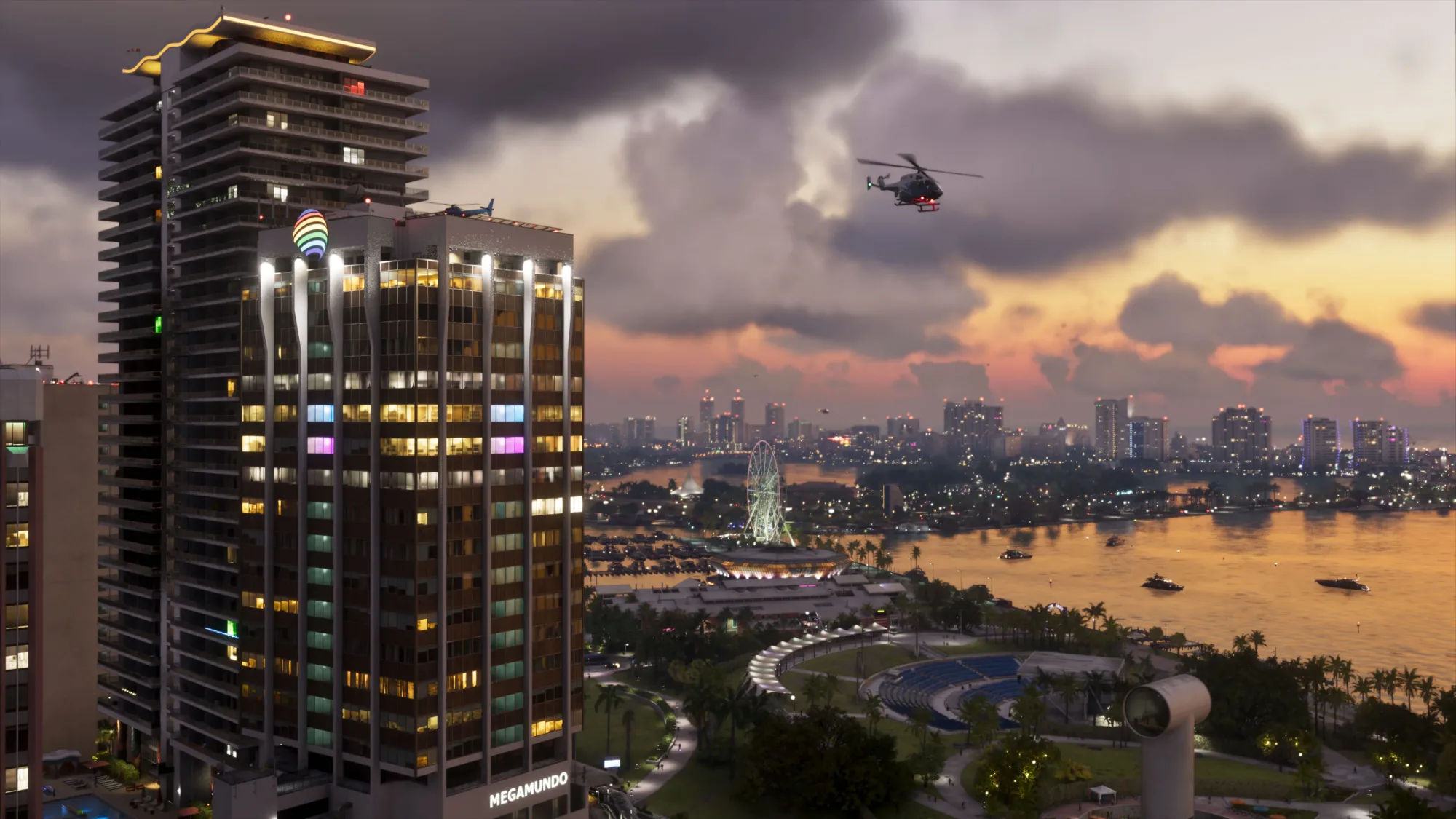
The bigger swing isn't the characters, it's the map. Vice City returns as a modernized, neon-and-glass take on Rockstar's Miami analog, reportedly around twice the size of GTA V's Los Santos on its own — but Vice City is only the anchor of Leonida, a full fictional state that trailer footage has confirmed includes the Grassrivers (an Everglades-style wetland with airboats and alligators), the Leonida Keys, rural backroads, and small towns that exist as their own places rather than connective tissue between mission markers. Community size estimates put the whole state at roughly double GTA V's total map area, and while I'd treat any specific square-kilometer number as an estimate rather than a Rockstar-confirmed figure, the trailers themselves back up the scale claim: airboat chases through mangrove swamps, highway driving between distinct built-up areas, and beach-to-bayou tonal shifts inside the same state that GTA V never had room for.
The open question — the one no trailer can answer — is density versus size. Rockstar has a real history of building worlds that are gorgeous to drive through and thin the moment you get off the critical path (GTA V's countryside remains the series' least interesting real estate a decade later). A state twice the size of Los Santos is only a win if the Grassrivers and the Keys have their own reasons to exist beyond a scenic detour between story missions, and that's simply not something a preview event or a trailer cut can prove either way.
A World That's Supposed to React — Reported, Not Yet Proven
Trailer footage has shown detailed weather — rain, wind, and ocean physics rendered with a level of fidelity the first reveal trailer specifically leaned on — and Leonida's Florida-coded setting makes hurricanes and tropical storms an obvious systemic hook. Reporting out of the hands-off preview event and Rockstar's own marketing has described NPCs reacting to conditions beyond simple animation loops — taking cover from rain, businesses shuttering ahead of a storm — but I want to be precise about sourcing here: this is preview reporting and trailer analysis, not a line from an official Rockstar systems breakdown the way the character-switching details are. Treat "hurricanes as a mission-generating system" as a plausible, trailer-supported direction rather than a confirmed feature, because right now that's exactly what it is.
This is also where GTA 6 carries the heaviest expectation gap of anything in this preview. Red Dead Redemption 2 proved Rockstar can build weather and wildlife systems that feel alive rather than decorative; GTA V never really tried. If Leonida's storms are closer to Red Dead's ecosystem simulation than to a lighting filter that occasionally makes streets wet, it's a genuine leap for the series. If they're mostly cosmetic, the marketing has oversold it, and that's happened before.
The Launch-Day Business Model Is Already Locked, and It's Worth Knowing Now
Whatever GTA 6 turns out to be as a game, some of the terms of playing it are already fixed. Standard Edition is $79.99, Ultimate is $99.99, and the extra $20 buys bonus vehicles, weapons, two exclusive side missions, and access to a handful of shops Standard owners won't have on day one — none of it gates story content, and Rockstar has confirmed Standard owners can buy the Ultimate upgrade later rather than deciding blind now. There's no PC version at launch and no announced window for one; Take-Two has been explicit that's a deliberate console-first choice, not a technical delay, and if GTA V's roughly 19-month gap to PC is any guide, PC players are looking at a wait well into 2027 at the earliest. And despite GTA Online quietly becoming one of the most profitable products in the entertainment industry, Rockstar has confirmed GTA 6 ships November 19 as a single-player-only experience — a next-gen online mode is a reasonable expectation given the series' pattern, not a confirmed launch-week feature.
None of that is a flaw in the game itself. It is, however, the actual shape of the purchase you're being asked to make in three months, and it's worth being clear-eyed about before the marketing machine hits full volume.
Verdict
I can't tell you how GTA 6 plays, because nobody outside Rockstar can yet — and any review claiming otherwise before November 19 is lying to you. What I can tell you is that the pitch, on its own confirmed terms, is the most ambitious thing this series has attempted: a switching mechanic built around a real relationship instead of a camera trick, a state-sized map where Vice City is the anchor rather than the whole point, and marketing that's leaned harder on systemic weather and world reactivity than any prior GTA has dared to promise. The risk is exactly where Rockstar has stumbled before — vast side content that goes shallow fast, and systemic promises that turn out to be a visual layer over old scripting. This score reflects confidence in the pitch and Rockstar's track record of eventually delivering on its ambitions, not a verdict on execution we haven't seen. Come back after November 19 — this page will have an actual answer by then, not an educated one.
Pros (based on confirmed systems):
- Character-switching now carries real AI companion behavior and a relationship system with stated consequences, not just a camera swap
- Leonida is built as a full state with distinct regions, not a resized Vice City
- Editions are structured fairly — the $20 Ultimate upsell doesn't touch story content, and it's purchasable later
- Rockstar's own track record (Red Dead Redemption 2 especially) backs up the ambition on paper
Cons (open questions going into launch):
- Zero hands-on time has been given to press or public as of this writing — every system claim is unverified in practice
- No PC version at launch, with a wait likely into 2027 or beyond
- No online mode on day one, despite GTA Online's outsized role in the franchise's business
- Rockstar's history of thin countryside and side content padding hasn't been addressed by anything shown so far
Jack reviews games for Gamingonix, judging every release on its own terms and telling you plainly whether it earns your time.