
Pearl Abyss is the studio behind Black Desert Online, a game that has spent a decade funding itself through one of the more aggressive cosmetic cash shops in the MMO space. So when the studio announced Crimson Desert as a single-player, single-purchase, dark-fantasy action RPG with no cash shop at all, the skepticism was fair — this is a company whose entire business model has been built around the opposite promise. Six months after its March 19, 2026 launch on PC, PS5, and Xbox Series X|S, and fresh off an August "Enhanced" update that rewrote parts of the story and added new skills, the honest answer is that Pearl Abyss mostly kept its word, and mostly delivered the game it spent nearly a decade teasing. Mostly is doing real work in that sentence, and this review is about exactly where it stops.
Kliff, and a Combat System That Took Patches to Earn Its Reputation
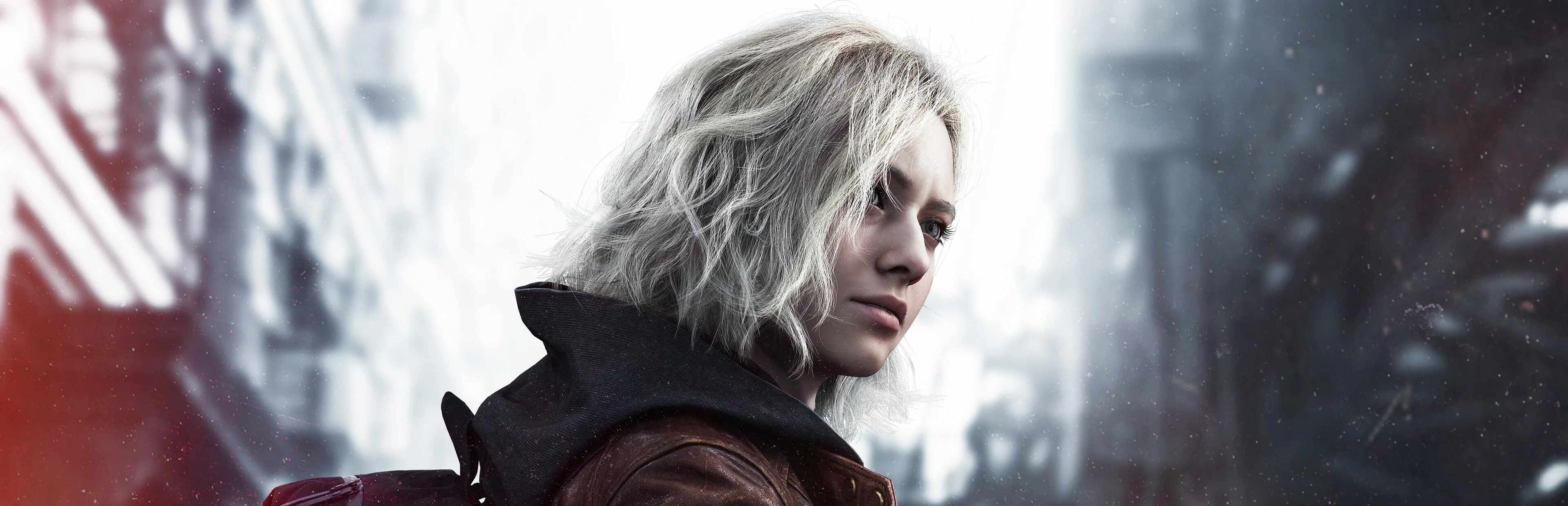
You play Kliff, the reluctant new leader of a mercenary band called the Greymanes after a rival company, the Black Bears, ambushes and scatters them in a night raid. The plot that follows — reunite the survivors, rebuild what was lost, work out who ordered the hit — is a fairly conventional revenge-and-reconstruction arc dressed in a genuinely striking dark-fantasy world, and Kliff himself is a big, physical protagonist built around grappling hooks, drop-kicks, and improvised weapon combat that's closer to God of War's brutality than a stat-sheet RPG's rotation. When it clicks, it's the best reason to play this game: winching an armored knight off his feet mid-fight, chaining a counter into a finisher, learning a boss's specific tell rather than just outgearing it.
At launch, it didn't click nearly often enough. Steam's user reviews turned "Mixed" within about twelve hours of release, with almost 5,000 negative write-ups piling up before day one was even over, and the control scheme — not the story, not performance — was the single most repeated complaint. Inputs felt mushy, counters didn't register when they should have, and the inventory and menu systems were described by more than one reviewer as actively hostile to learn. Pearl Abyss responded with an early patch that specifically targeted responsiveness, and it worked: Steam's rating climbed to "Mostly Positive" within weeks and eventually reached "Very Positive," a tier it's held onto since. Having played it post-patch rather than at launch, the current build genuinely earns comparisons to the best third-person melee combat on the market — but it's worth being blunt that the version critics and day-one buyers actually experienced was rougher than the game Pearl Abyss is selling now.
Pywel Is Enormous, and Mostly Knows What to Do With the Space
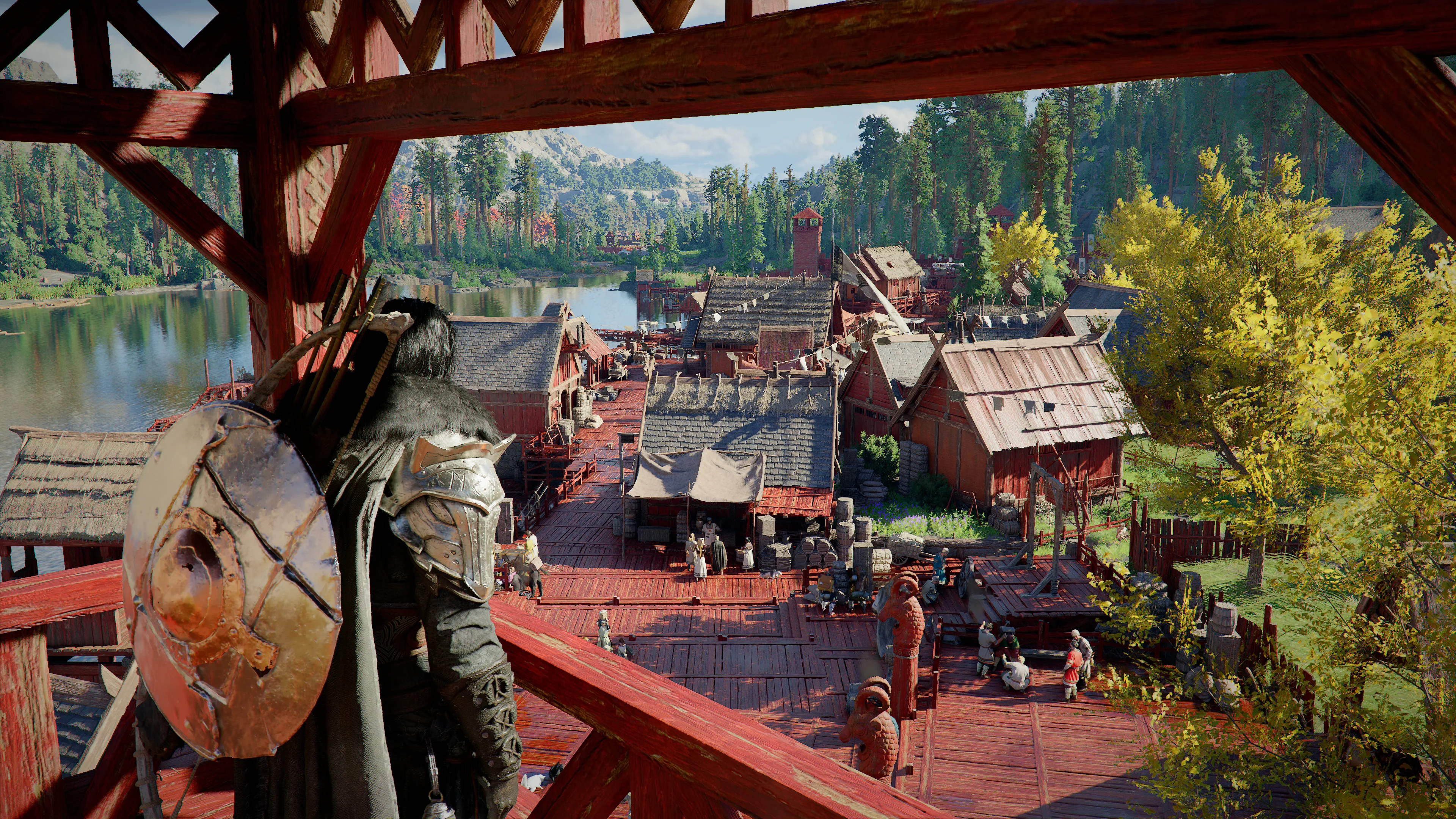
The continent of Pywel is the other half of the pitch, and it's not an exaggeration. Pearl Abyss has put the explorable landmass at roughly 90 square kilometers across five connected regions — frozen tundra, scorching desert, grassland, dense forest, and war-torn borderlands — and then added a second, vertical layer of floating "Sky Map" islands on top of it, pushing total explorable space closer to 100 square kilometers once you're not just walking the ground. Pearl Abyss's own marketing has called it more than twice the size of Skyrim and bigger than Red Dead Redemption 2, and while any studio's own size comparison should be read with a raised eyebrow, riding across Pywel does feel closer to Rockstar's density than to the scenic-but-empty countryside a lot of open-world RPGs pad their maps with. Villages have their own micro-conflicts, hunting camps reward tracking specific animal behavior rather than just walking up and swinging, and the transition from a snowbound mountain pass to a market town genuinely changes what there is to do, not just how it looks.
Where it thins out is the connective tissue between those high points — fetch-and-clear side content that exists mostly to fill the map rather than to say anything, and the kind of bandit-camp repetition every open-world RPG since Assassin's Creed's map-icon era has struggled to avoid. Pywel earns its scale more often than most games this size do. It doesn't earn it constantly.
The Writing Never Quite Catches Up to the World
This is where Crimson Desert's review scores actually split, and it's worth naming honestly rather than smoothing over. IGN's widely discussed 6/10 zeroed in on exactly this: fights that drag on too long outside major story beats, puzzles that don't telegraph their own logic, and writing that doesn't match the ambition of the setting around it. That review became a genuine flashpoint — Steam threads are still arguing about it — but it's not an outlier take dressed up as a hot one. Game Informer landed at 7/10 for similar reasons. The story of Kliff rebuilding the Greymanes has real emotional beats and a genuinely well-realized supporting cast, but the dialogue that carries it is frequently stiff, exposition-heavy, and slower to develop than the combat and world design around it deserve. Forbes' 9.5/10 and GamesRadar's 4/5 exist on the same Metacritic page as that IGN score, which tells you this isn't really a case of one outlet missing the point — it's a game whose systems and whose script are operating at two different levels of polish, and different critics weighted that gap differently.
The August Enhanced update made a real, specific effort to close it: new cutscenes, additional story moments, and narrative-flow fixes to the main quest were headline features of that patch, alongside eight new skills for Kliff and a system called Abyss Links that lets other playable characters share progression resources. It's a better-told story in September than it was in March. It is still not the game's strongest asset, and no patch note claims otherwise.
No Cash Shop Is a Real Promise Kept, Priced at $69.99
Given who made this, the monetization question deserved more scrutiny than most open-world RPGs get, and Pearl Abyss's answer has held up: no cosmetic cash shop, no premium currency, no post-launch storefront bolted onto a single-player game. It launched at $69.99 for the standard edition, with a $79.99 Digital Deluxe and $89.99 Physical Deluxe offering cosmetic bonuses only, and every major patch since — including August's Enhanced update — has shipped free to everyone who already owns the game. For a studio whose flagship product is a decade-old MMO built on recurring spend, that's not nothing, and it's the one part of the pitch that generated zero backlash from day one to now.
Six Months of Genuine Course Correction
What makes Crimson Desert an unusually interesting case to review this far past launch is how much distance there is between the March version and the one live today. Version 2.00.00 in August rewrote story moments and added new skills; version 2.02.00 in September fixed quest, housing, and trade-storage bugs and brought Mac cross-save online. That's not a studio coasting on a decent Metacritic average — it's one visibly still working the game the way Pearl Abyss originally pitched it, six months after most publishers would have shifted the team to the next project. The flip side is that anyone who bought this in March and bounced off the control issues or the writing has every right to feel like they paid full price to beta test the version that's actually good now.
Verdict
Crimson Desert, as it plays today, is a genuinely strong open-world action RPG buried under a launch that undersold it. The Kliff combat system, post-patch, is legitimately excellent — physical, readable, and built around learning enemies rather than outgearing them. Pywel is one of the few 2026 open worlds that earns its size claims more often than it coasts on them. And Pearl Abyss kept a promise about monetization that plenty of studios with a much cleaner track record wouldn't have. Set against that: the writing still lags behind the systems around it, side content thins out fast once you're off the critical path, and the March launch — controller complaints, inventory friction, a Steam rating that opened in "Mixed" territory — was rough enough that IGN's skeptical score wasn't an outlier take, it was an accurate snapshot of a real product at a real moment. If you're coming to this in September 2026, you're getting the patched, Enhanced, meaningfully better version of the game the initial reviews argued about — and that version is worth playing. Just don't mistake it for the game that shipped in March.
Pros:
- Kliff's post-patch combat is physical, readable, and genuinely among the best third-person melee systems released this year
- Pywel's 90km²-plus continent (plus the Sky Map's floating islands) mostly earns its scale rather than padding it with empty terrain
- No cash shop, no premium currency, no live-service monetization — a real promise kept for a $69.99 one-time purchase
- Six months of substantive free updates, including the August Enhanced patch's new story content and skill additions
Cons:
- The March launch shipped with clunky controls and inventory friction serious enough to tank Steam's rating within hours — patches fixed it, but day-one buyers paid full price for the rough version
- Writing and dialogue consistently trail the quality of the combat and world design around them, even after Enhanced's narrative pass
- Side content and bandit-camp busywork thin out noticeably once you're off the main Greymanes storyline
- Fight length and encounter pacing outside major story beats can drag, a fair criticism even in the current build

Jack reviews games for Gamingonix, judging every release on its own terms and telling you plainly whether it earns your time.