
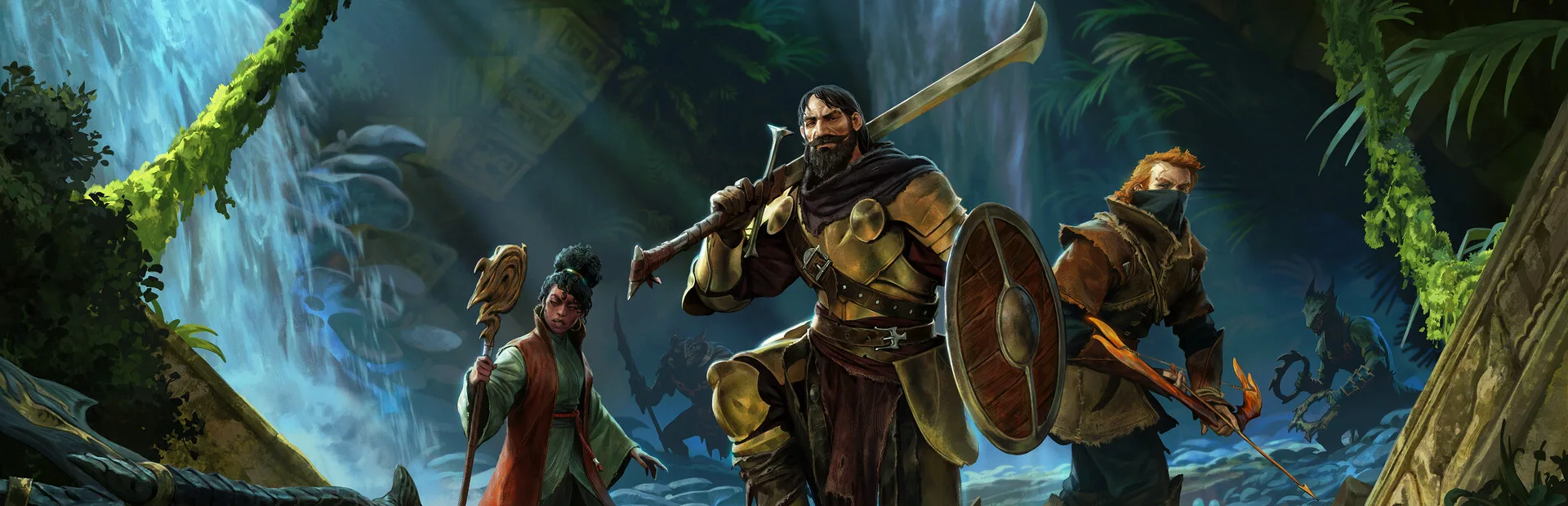
Most survival games pick a lane: you either terraform a voxel world like Minecraft, or you manage a hunger-and-temperature meter like The Forest, or you grind a skill tree like an action-RPG. Enshrouded, from German studio Keen Games, has spent nearly three years insisting it can do all three without any of them feeling bolted on, and on October 15, 2026, it stopped being a work in progress and started being a finished pitch. Version 1.0 leaves behind the Early Access label it carried since January 2024 — a run that pulled in more than 5 million cumulative players — and adds a new volcanic endgame biome, a raised level cap, a full voiceover pass on every journal entry, and a visual scripting system that lets players build their own dungeons. It landed to a near-unanimous critical response (88 on Metacritic, every one of twelve reviews positive) and a Steam user base that's settled into "Very Positive" territory rather than the "Mostly Positive" wobble that's become the default outcome for this genre's biggest 1.0 launches. The question worth asking isn't whether Enshrouded is good — the scores already answered that — it's whether the systems underneath justify calling it finished rather than just further along.
The Shroud Is the Clock the Whole Game Runs On
The title mechanic is also the smartest piece of design in the game. The Shroud is a toxic fog blanketing most of the map, and stepping into it starts a countdown — four minutes at the start, extended minute by minute as you level up your Flame (Enshrouded's stand-in for a traditional character level) and your gear. Run out the clock inside the fog and you die, full stop, no warning grace period beyond the UI timer ticking down in the corner. That constraint does double duty: it's the game's pacing mechanism, forcing you to treat the Shroud's depths as something you earn access to rather than wander into, and it's the game's map design, because the richest resources, dungeons, and whole regions sit inside Shroud pockets that are physically impossible to fully explore until your Flame level catches up. It's a cleaner solution to the "why can't I just rush the good loot" problem than most survival games bother with, because the answer isn't an arbitrary gate, it's a mechanic you're fighting against in real time, and watching that timer climb from four minutes to fifteen over dozens of hours is one of the better-paced power curves in the genre.
Building Graduates From Voxel Sandbox to Logic Machine
Enshrouded's base-building was already a cut above most survivalcraft competitors going into 1.0 — full voxel terraforming means you're not snapping prefab pieces together, you're carving and stacking terrain itself, smoothing slopes, digging out basements, and sculpting roofs that don't have to conform to a grid. The new Airborne Architect skill removes the last real friction point by letting you build in a free-flying mode instead of constantly climbing scaffolding to reach a wall you're three blocks short of finishing. The genuinely new piece is Sparkworks, a visual logic system built around AND/NAND-style gates that lets players wire up player-triggered events, custom enemy spawns, and entire shareable mini-dungeons. It's an ambitious thing to ship in a survival game, and it works — community-built contraptions and puzzle rooms are already circulating — but Keen undersells how steep the learning curve is. The game never clearly tutorializes boolean logic concepts for players who've never touched a redstone circuit or its equivalent, and the practical result is that Sparkworks will get used by a motivated minority and ignored by everyone who just wants a nicer house.
Cinder's Cradle and the Level 50 Ceiling Give Veterans Somewhere to Go
The headline content addition is Cinder's Cradle, a volcanic fifth biome covered in ash and lava fields that introduces the Ancient Constructs as a new enemy faction, alongside 37 new enemy types and variants spread across old and new regions. It sits at the top of the game's difficulty curve, paired with a level cap raised to 50 and gear scaling up to item level 55, which matters because the Early Access version had a real problem with veteran players outleveling the available content well before the credits rolled. Combat got real additions alongside the new ceiling: nine new spell types for the Battlemage side of the shared skill tree, including crowd control, new area damage, and summons, plus an "Eternal" variant of every spell that casts without consuming charges once unlocked, smoothing out the mana-management busywork that used to interrupt longer fights. Enshrouded still has no fixed classes — one shared tree covers Warrior, Guardian, Ranger, Assassin, Battlemage, and Healer archetypes, and you're free to mix points across all of them — so these additions read less like new classes and more like the existing build space finally having enough late-game room to actually specialize in.
The Rough Edges 1.0 Didn't Sand Off
Credit where it's due on the parts that improved, but a few long-standing complaints rode straight through to the finished release. Inventory management is still a chore — there's no dedicated quiver, spellbook, or potion pouch, so your bag fills up with mandatory consumables before you've picked up anything worth keeping. The story remains thin even with the new voiced journal narration (a nice touch, read by a single consistent narrator across every entry, that gives the lore an endearing storybook quality it didn't earn through writing alone); quest structure is still closer to a checklist than a narrative. Performance can dip below 60fps at 1440p on high settings on some PC configurations, with reports the engine leans too hard on a single CPU core rather than spreading load evenly. And despite Keen's own stated interest in cross-platform play, 1.0 ships with zero crossplay between PC's 16-player co-op lobbies and PS5's 8-player cap — Steam players and PlayStation players are fully separate populations with no cross-save either. None of these are dealbreakers, but they're the specific list of things a "finished" 1.0 should have closed out and didn't.
Verdict
Enshrouded earns its full-release status on the strength of a core loop that was already better-designed than most of its competition and has now been given a real reason to keep playing past the credits. The Shroud timer is still the smartest hook in the survival genre's current crop, voxel building paired with free-flying construction and the ambitious (if under-taught) Sparkworks logic system gives it a creative ceiling most base-builders don't reach for, and Cinder's Cradle plus the level 50 cap finally give committed players somewhere to spend thirty extra hours. What keeps it from the top tier is the list of problems that should have been 1.0's whole job to fix and weren't — clunky inventory, a story that's still scaffolding, inconsistent PC performance, and a complete absence of crossplay between the game's two live platforms. At $39.99, with PS5 launched alongside PC and Xbox still a season away, this is an easy recommend for anyone who wants Valheim's terraforming ambition with a sharper difficulty curve and real co-op scale. Just go in expecting the inventory screen to annoy you long before the Shroud does.
Pros:
- The Shroud's countdown timer is a rare survival-game gate that's a genuine real-time mechanic rather than an arbitrary level wall
- Full voxel terraforming plus the new free-flying Airborne Architect skill makes base-building both deep and comfortable at the same time
- Cinder's Cradle, the level 50 cap, and nine new spell types give veterans real late-game content instead of just more of the same biomes
- A shared, class-free skill tree lets you freely mix Warrior, Ranger, Battlemage, and Healer builds rather than locking you into one archetype
- Co-op scales to 16 players on PC without the loop falling apart into chaos
Cons:
- Inventory management is still a genuine chore, with no quiver, spellbook, or potion pouch to offload mandatory consumables
- Story and quest writing remain thin despite the new full voiceover pass on journal entries
- Performance on PC can dip below 60fps at 1440p, with reports the engine underuses multi-core CPUs
- Sparkworks' logic-gate system is powerful but barely tutorialized, limiting it to players willing to learn boolean logic on their own
- Zero crossplay or cross-save between PC and PS5 at launch, despite Keen saying cross-platform play is in development

Jack reviews games for Gamingonix, judging every release on its own terms and telling you plainly whether it earns your time.