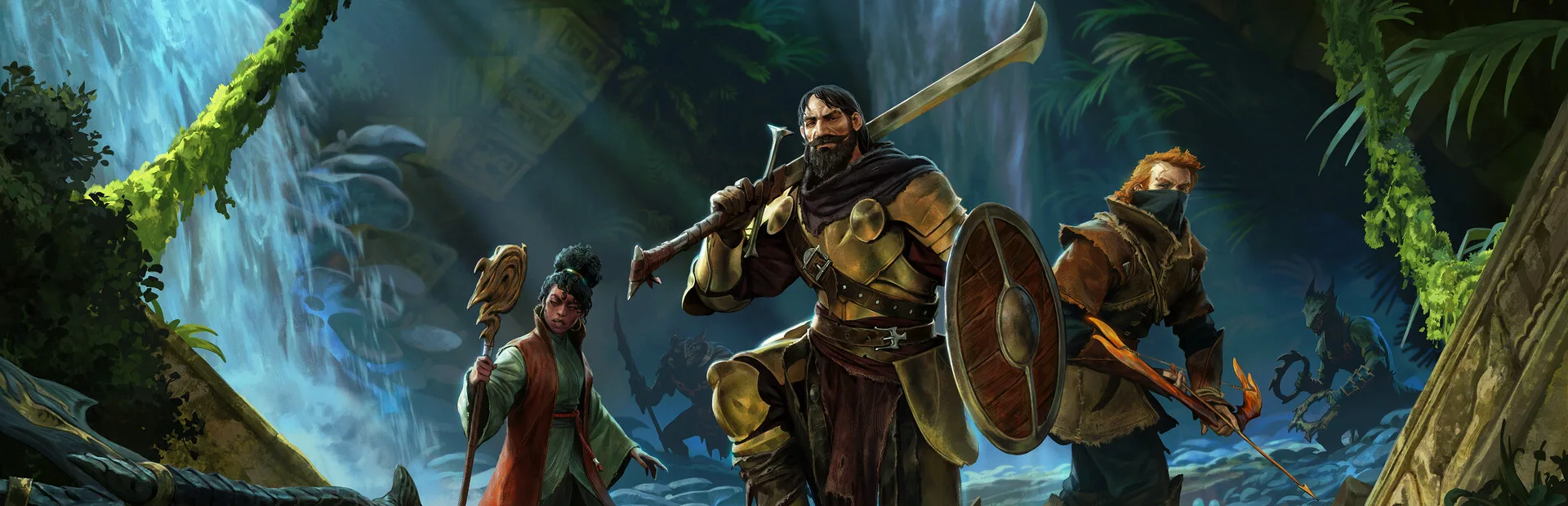

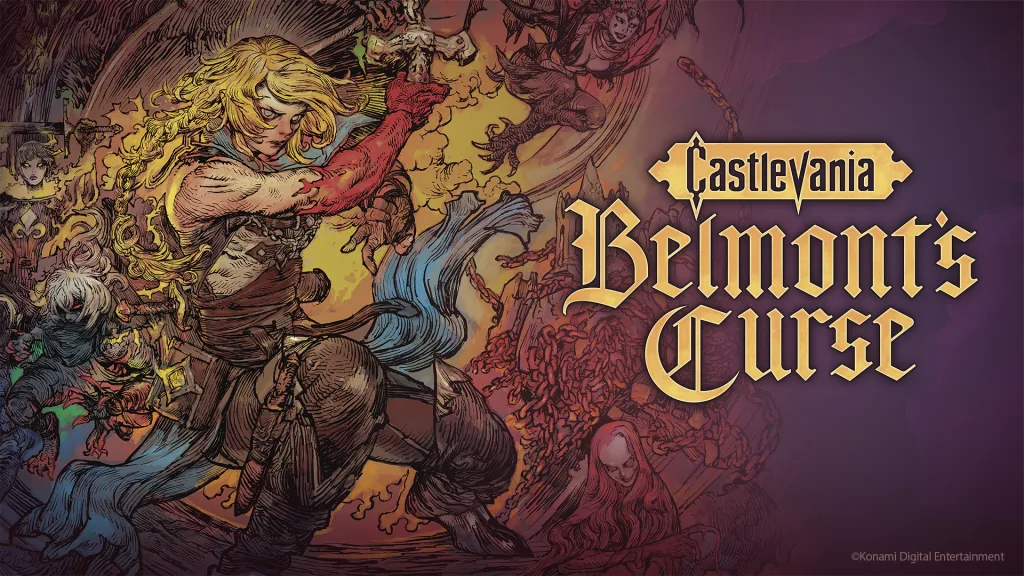
Castlevania hasn't had a proper console entry since Lords of Shadow 2 limped to the finish line in 2014, and Konami spent most of the years since letting Netflix do the franchise's talking for it. Belmont's Curse arrives for the series' 40th anniversary as the opposite of a victory-lap cash-in: it hands the whip to Rose Belmont, daughter of Trevor and Sypha, drops her into a Paris of 1499 where Dracula's castle has rematerialized over the burning city, and puts the whole thing in the hands of Evil Empire — the Dead Cells studio, working with Motion Twin's original team as advisors. That pedigree shows in roughly every system the game touches. This isn't a nostalgia exercise cosplaying as Symphony of the Night; it's a studio that has spent a decade thinking about momentum and risk-reward combat applying that obsession to a license that invented the genre it now excels at.
Rose Belmont's Whip Finally Earns Its Vertical Game
Every Belmont since the NES has cracked a whip in a straight horizontal line and called it a day. Rose's whip grapples. Lock onto an enemy, a wall sconce, or a chandelier mid-air and she yanks herself toward it, chains into a follow-up strike, or uses the pull to reposition over a pit that would otherwise end the run. It sounds like a small addition next to the genre-standard double jump, but it rewires how every fight plays out, because Rose is rarely standing still long enough for an attack pattern to actually threaten her the way it would a classic Belmont rooted to a staircase. Pair that with seven selectable weapon classes — a greatsword that trades speed for stagger damage, a spear that keeps distance at the cost of raw power, daggers built around the grapple's aerial openings — and combat stops being a single moveset you memorize and becomes a loadout you build around how you want to move through a room.
The other half of the kit is Arcana: every boss killed grants Rose a tarot card tied to that fight, unlocking a spell alongside new traversal options, while a separate relic system lets you slot passive buffs independently of which card is active. It's Symphony of the Night's relic hoarding reorganized around build variety rather than a single critical-path checklist, and it gives Belmont's Curse the best moment-to-moment combat the series has produced — multiple outlets have called it the strongest Castlevania has ever played, and having fought through all seven weapon types across a full run, I don't think that's hyperbole. The catch is a learning curve Konami doesn't soften for newcomers: dodge windows are tight, several mid-game enemies attack in overlapping pairs specifically to punish greedy whip-grapples, and the game expects you to read tells rather than panic-roll through them. It's a demanding combat system wearing a familiar coat of paint, and it will frustrate anyone who came in expecting the forgiving swing-and-step rhythm of the Igarashi era.
A Castle Over Paris That Actually Rewards Getting Lost
Evil Empire builds Paris as a genuinely interconnected map rather than a string of biome-gated corridors — rooftops collapse into catacombs, cathedral naves open onto the castle's own gravity-bent stairwells once Dracula's domain starts bleeding into the city proper, and a relic earned four hours in will routinely unlock a shortcut back to an area you'd written off in hour one. That's the Metroidvania promise every entry since 1997 has made, but the scale here is bigger than anything the series has attempted: this is a map built to be walked, re-walked, and quietly resented for how many dead-end torch-lit alcoves turn out to hide nothing more than a flask upgrade. The pacing dips noticeably in the back third, where new areas start recycling enemy sets from earlier zones under a different color palette, and the game's insistence on gating critical path progress behind specific Arcana means a first-time player will backtrack through rooms they've already cleared two or three times before the credits roll. None of that undoes the achievement of the map itself — it's the most purposefully designed Castlevania world since Aria of Sorrow — but it's also not the tight, surgical six-hour runs the 8-bit and GBA games were built on, and it asks for patience accordingly.
The Score Sounds Right in the Room, Forgettable Outside It
Composer Daniel Asadi's soundtrack leans hard into gothic organ and layered strings over the synth-and-guitar hybrid that defined Lords of Shadow, and in context it does exactly what a Castlevania score needs to do — it sells the cathedral, the candlelit library, the throne room, without ever fighting the sound design during a boss fight. Taken out of context, though, it's the component of the package critics and players have been least kind to. Across 70-plus tracks there's a real shortage of the kind of standalone earworm the series built its identity on — no "Bloody Tears," no "Vampire Killer" riff that you'll be humming a week later — and the atmospheric, cinematic approach occasionally reads as mood music rather than a theme. It's a soundtrack that does its job without ever demanding you remember it, which for a franchise whose music has outlived three separate reboots of the games themselves, counts as the single area where Belmont's Curse plays it safest.
Konami Shipped a Beautiful Game Through a Broken Front Door
Here's the part that can't be waved away: Belmont's Curse launched on Steam into a genuinely rough week. Players running monitors above 120Hz hit a black-screen failure on boot tied to a V-Sync and frame-rate-cap conflict the game didn't handle gracefully, Steam Deck owners reported stutter bad enough to make the handheld version borderline unplayable at launch, and enough people hit outright crashes a few minutes into a session that Steam's user reviews swung to "Mixed" in the first 48 hours, even as critic scores sat comfortably in the high 80s. Konami's fix is a manual one — drop your display refresh rate below 60Hz, force V-Sync on or cap the frame rate in the in-game video menu, and in persistent cases, hand-edit the save file to strip out the broken video preferences entirely — which is a lot to ask of anyone who just wants to swing a whip at a werewolf. Console versions have fared better: PS5 and Xbox Series X both run clean, and the eventual Switch port holds a stable 60fps that console players won't need to troubleshoot their way into. But the PC version is the platform most of this review's readers will actually buy, and shipping a 40th-anniversary flagship with a day-one display bug this disruptive is the one real unforced error in an otherwise disciplined launch.
Verdict
Belmont's Curse earns its "best Castlevania in years" reputation on the strength of a combat system that finally does something new with the whip after four decades, a Paris-and-castle map ambitious enough to be the series' most interconnected world since the GBA era, and a willingness to hand the lineage to a new protagonist instead of recycling Alucard one more time. It's held back from the absolute top tier by pacing that sags in its back third, a score that sets mood better than it writes melody, and a PC launch that genuinely betrayed the platform's players for the first week with crashes and black screens Konami is still patching around. Play it on console if you have the choice, go in ready to hand-edit a config file if you don't, and either way: this is the gothic saga's real return, not a victory lap.
Pros:
- The whip-grapple adds genuine verticality to combat for the first time in the series, and seven weapon classes give it real build variety
- The Paris/castle map is the most ambitious, interconnected Metroidvania world Castlevania has built since the GBA games
- Arcana and relics let you reshape Rose's kit around playstyle rather than a single critical-path checklist
- A new protagonist and setting that respect 40 years of continuity without leaning on nostalgia alone
- Console versions (PS5, Xbox Series X/S, Switch) run clean and hold stable frame rates
Cons:
- PC launched with a disruptive black-screen bug on high-refresh monitors, Steam Deck stutter, and crashes that tanked early Steam user reviews
- The back third recycles enemy sets and leans on backtracking that outlasts its welcome
- A 70-plus-track score that serves the mood well but produces almost nothing as memorable as the series' classic themes
- The tight dodge windows and overlapping enemy patterns will punish players expecting the more forgiving combat of earlier entries

Jack reviews games for Gamingonix, judging every release on its own terms and telling you plainly whether it earns your time.