

Phantom Blade Zero doesn't have a tutorial problem so much as a vocabulary problem — it hands you a shared resource bar, two weapon slots, two more for Phantom Edges, and four difficulty names you've never seen before, then trusts you to figure out which of those things matters in the first ten minutes of a fight. Most of that trust is earned once the system clicks, but the clicking takes longer than it should if you're treating Sha-Chi like a stamina meter or panicking into a heal the way a decade of other action games has trained you to. Here's what actually governs combat, what to do with your first skill points, and which difficulty to start on so you're not relearning the game thirty hours in.
Sha-Chi Is the Whole Fight, Not Just a Stamina Bar
The orange gauge under your health is Sha-Chi, and the single biggest adjustment for anyone new to the game is realizing it isn't just your stamina — it's a resource both you and whoever you're fighting are spending and regenerating at the same time. Light attacks build your own Sha-Chi cheaply, which is why the game wants you opening with quick hits rather than going straight to something heavier. Sha-Chi Combos — your strong attacks and specials — burn through it fast, and so does holding a block for too long. Blocking a hit at all costs you Sha-Chi even when it works; it's a tax, not a free action. The habit worth building early is spending Sha-Chi deliberately on combos that lead somewhere, rather than hoarding it out of instinct or bleeding it away on blocks you could have avoided with a dodge instead.
Blue Flash Means Parry, Red Flash Means Dodge — Never Mix Them Up
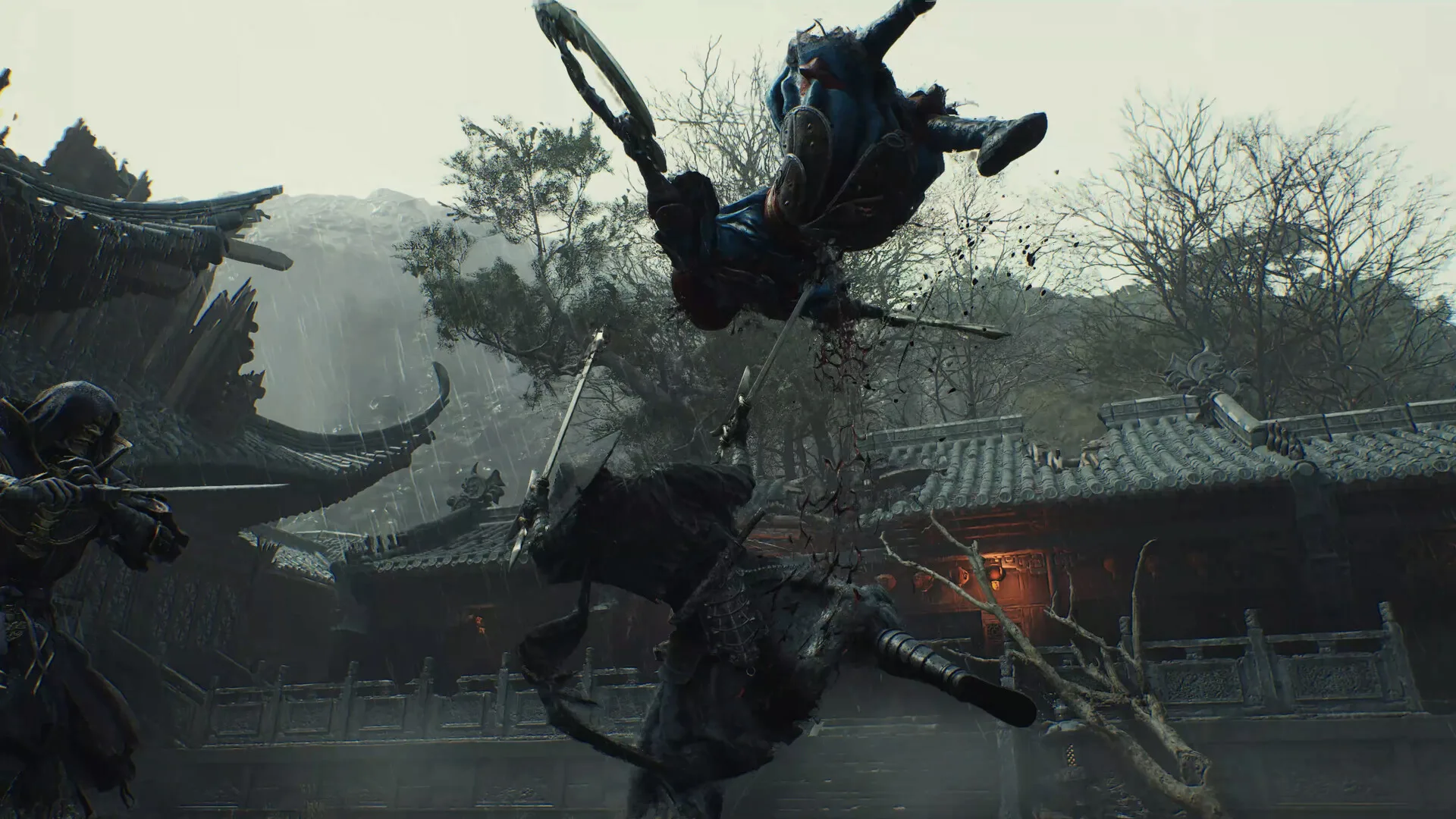
Enemy attacks telegraph with a color, and the two colors ask for opposite responses. A blue flash means the attack can be blocked or parried — time a block right as it lands for a perfect parry, which costs you no Sha-Chi at all and drains theirs instead, the single best exchange rate in the entire combat system. A red flash means the opposite: that attack cannot be blocked or parried under any circumstance, and your only answer is a dodge timed just before it connects. Trying to block or parry a red-flash hit doesn't just fail, it eats your input and leaves you standing there for the full hit. If you're not sure which color you're looking at mid-fight, dodge — a clean whiff from dodging a blue attack costs you nothing, while blocking a red one costs you real health. Nail either response at the right instant and you'll trigger Ghoststep, which repositions you behind the attacker for a free counter — it's the actual skill ceiling of this game's combat, not a hidden combo string.
Weapon-Swap Out of Trouble Instead of Healing Into It
You carry two primary weapons and two Phantom Edges at once, and switching between any of them mid-fight does more than change your moveset — it fully refills your Sha-Chi bar on the spot. That makes weapon swapping your actual panic button, not your medicine. If you're caught with an empty gauge and no good options, swap weapons before you reach for a heal; it buys you the Sha-Chi to block or parry your way back into the exchange instead of eating a hit while your healing animation plays out. The catch is that primary weapons go on a cooldown after you switch away from them — a long one early on — so you can't ping-pong between the same two blades every few seconds. Phantom Edges don't share that cooldown and can be swapped freely between each other, but they draw from a shared, limited charge pool that only refills at checkpoints, so they're a resource to spend on real openings, not a reflex you lean on constantly.
Guard-Broken Enemies Are a Free Hit — Don't Let It Go to Waste
Every stance exchange is building toward the same outcome: empty an opponent's Sha-Chi bar completely and they're guard-broken, unable to block or parry for a short window while their gauge refills. That window is the actual damage check of the fight — a weapon with a high guard-break stat gets you there faster, and a clean parry chain is usually the quickest way in. The mistake new players make is landing the break and then hesitating, unsure what to do with it, while the window closes on its own. Commit to your heaviest available combo the instant you see an enemy stagger out of guard. Swapping weapons also cancels you out of your own guard-broken state instantly if the fight ever turns against you, which is worth remembering as an emergency exit, not just an offensive tool.
Heal on the Opening, Not on the Hit
You carry two Medicine charges at a time, refilled at checkpoints, and the instinct to use one the moment you take damage is almost always the wrong call. Healing has a cast window, and triggering it mid-enemy-combo just means you eat the next hit on top of the one that made you panic in the first place — sometimes hard enough to cancel the heal outright. Block or dodge through the rest of whatever combo you're facing, wait for the actual gap once the enemy resets, and heal there. It feels slower in the moment, but it's the difference between losing one Medicine charge and losing the fight.
Pick a Weapon Archetype That Matches Your Reflexes, Then Build Its Tree
There's no single, account-wide skill tree in Phantom Blade Zero — each weapon you pick up carries its own progression of new moves and combo extensions, unlocked with Remnant Dust as you use and upgrade that specific blade. That changes how you should think about your first few hours: instead of spreading Remnant Dust thin across everything you find, settle on one primary weapon archetype early and commit to it. Lighter weapons like twin blades or dual hooks build Sha-Chi faster and favor weaving between multiple enemies, while something like a war axe or greatsword trades that speed for raw guard-break power and bigger punishes once you've earned an opening. Neither is the "correct" pick — it's a real tradeoff between tempo and payoff — but bouncing between archetypes every time a new weapon drops means you're always fighting with an undeveloped moveset instead of one you've actually learned.
Bells Are Your Checkpoints, and They Remember What You've Cleared
Bells scattered through the world function as your save points — ringing one restores your HP, tops off your Medicine charges, and replenishes your Phantom Edge pool. They also lock in your progress against the enemies around them: once you've reached a bell, anything you've already killed on the way there stays dead, so you're not re-clearing the same corridor every time you die to whatever's past it. Make a habit of ringing a bell the moment you reach one rather than pushing on low on resources to see what's next — there's no penalty for doing it early, and every charge you're missing is one you'll wish you had during the next fight.
Start on Pathbreaker, and Know What 66 Days Actually Asks of You
Phantom Blade Zero ships with four difficulty settings, and they're not just damage sliders. Wayfarer softens enemy aggression and widens guard-break windows for players who want the story and the spectacle without the game pushing back hard. Pathbreaker is the standard, fully-tuned experience the game was designed around, and it's the right starting point for anyone who wants Sha-Chi reads and parry timing to actually matter. Hellwalker only unlocks after a New Game+ clear and layers in extra boss patterns on top of Pathbreaker's baseline. 66 Days is the one with real stakes: it runs at Hellwalker's difficulty but caps you at 66 total deaths for the entire playthrough — a nod to the 66-day clock Soul is racing in the story — and it only unlocks after you've already finished the game once on something else. Don't start there. Learn the parry-or-dodge read and the weapon-swap habit on Pathbreaker first; 66 Days is a victory lap, not an entry point.
Bottom Line
Treat Sha-Chi as a shared resource you're racing to empty on the enemy, not a meter you're protecting on yourself — spend it on combos that lead to a guard break, and refill it by swapping weapons instead of panicking into a heal. Match your response to the color you're seeing, block or parry blue and dodge red, and commit the instant you break someone's guard rather than hesitating in the window you just earned. Settle on one weapon archetype early so its skill tree actually grows, ring every bell you find, and start the whole thing on Pathbreaker — 66 Days will still be there once you've actually learned the fight it's testing you on.

Alex writes practical, beginner-friendly guides for Gamingonix, turning confusing early-game decisions into clear next steps.