
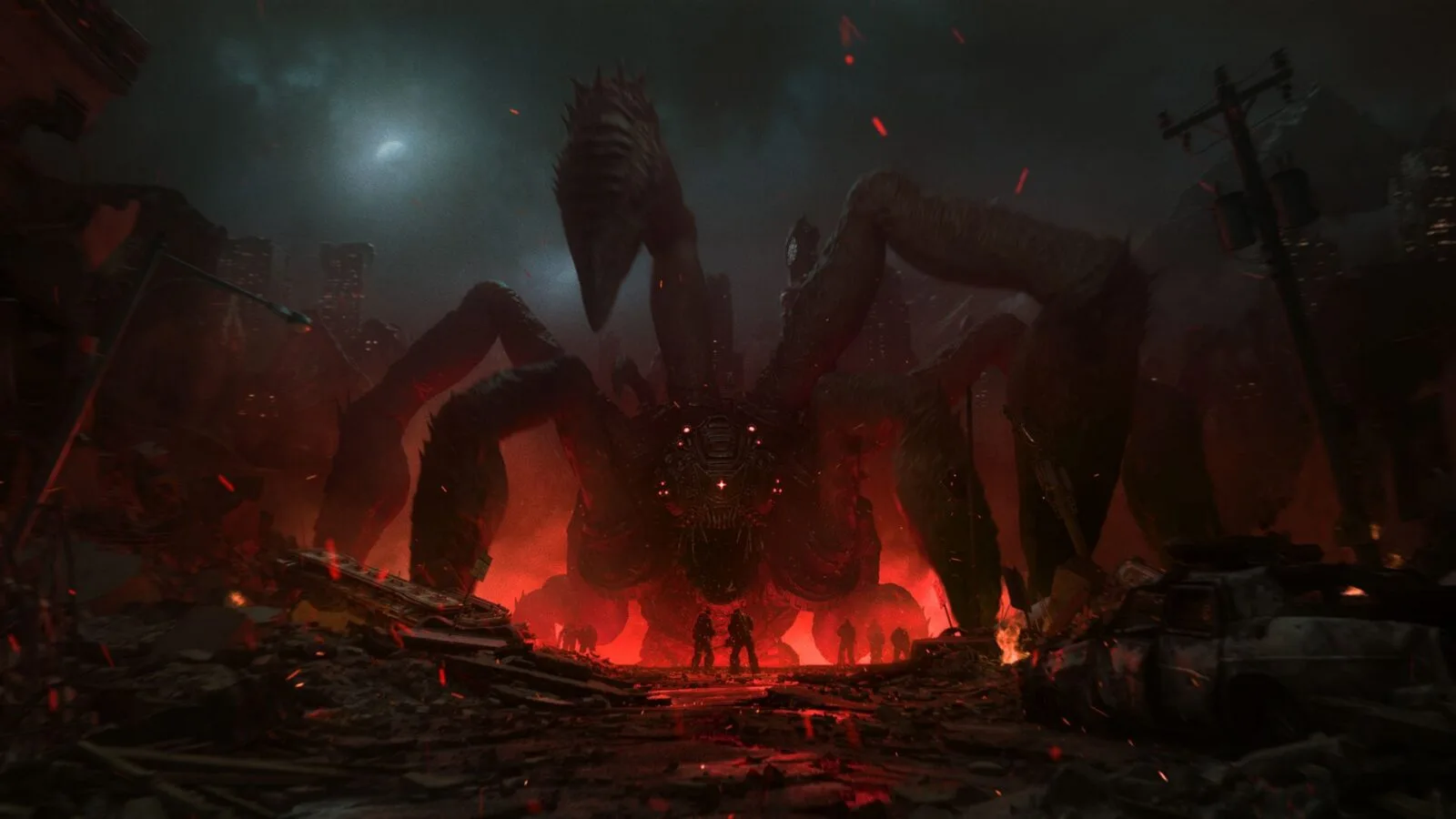
Gears of War: E-Day launched October 6, 2026, and it's doing something the series hasn't tried before: instead of continuing Marcus Fenix's story forward, it rewinds to the day everything went wrong. If your only reference point for Gears is "guy with a chainsaw gun fights underground monsters," here's what you're actually walking into, what's changed under the hood, and which of the game's three pillars — campaign, Horde Siege, or Versus — is the right place to spend your first few hours.
What You're Actually Buying
E-Day is on Xbox Series X|S and PC (Steam and the Microsoft Store), and it's a day-one Xbox Game Pass Ultimate title — the cheapest way in if you're not sure yet whether you want to buy outright. One thing worth knowing before you go looking for it anywhere else: this is an Xbox console exclusive. Microsoft confirmed there's no PS5 version coming, despite earlier rumors suggesting otherwise, so if you're on PlayStation, Game Pass on PC or cloud is your only route in.
There are three editions. The Standard Edition runs $69.99 and gets you the full game — campaign, Versus, and Horde Siege, nothing locked away. The Premium Edition is $99.99 and adds the Bravo Squad Signature Weapon Pack, five seasonal Customization Packs starting with the Emergence Pack at launch, and 1,000 Iron (the premium currency). If you already own Standard and want to upgrade, there's a $30 upgrade path to Premium rather than paying full price twice. A $299.99 Collector's Edition exists for physical merchandise on top of the Premium digital content. None of the Premium extras are weapons or power — they're cosmetic packs and currency — so Standard is the right call unless you already know you'll be playing long-term and want the season content bundled in.
The Story: This Is Emergence Day, Not a Sequel
E-Day is set fourteen years before the original Gears of War, and it drops you into the opening hours of the Locust Horde's surprise attack on the city of Kalona — the day humanity calls Emergence Day, or E-Day. You don't need to have played the original trilogy to follow this one; if anything, it's built as the point newcomers should actually start the series, since every major character here is meeting each other for the first time too.
You're playing Bravo Squad: Sergeant Marcus Fenix, Private Dominic "Dom" Santiago, demolitions specialist Mags Carter, and cadet communications officer Lucas Reyes. All four are playable from the start, and the game makes a point of having them meet for the first time at a bar in Kalona right as the Locust emerge — so the squad chemistry you remember from later games (especially Marcus and Dom) is still being built here, not already established. Mags is a disgraced former demolitions officer working a civilian refinery job when the attack hits, and Lucas is a cadet who's never seen combat — both are there specifically so the story has characters discovering how brutal this war is going to be at the same pace you are.
One detail worth knowing going in because it explains a weapon you'll see constantly referenced in series lore: the chainsaw bayonet that defines the Lancer in every other Gears game doesn't exist yet. E-Day's story is literally the origin of it — Marcus tries to use a standard blade bayonet against a Locust Drone early on and it fails him, which is what leads to the improvised chainsaw attachment that becomes the Mark 2 Lancer going forward. If you've played later Gears games, this is the one piece of hardware lore E-Day exists to explain.
Campaign Length and Co-op — Don't Play This Solo If You Can Help It
The campaign is the longest The Coalition has built for the series, running roughly 14 hours for a straight story playthrough and closer to 16+ if you're chasing every Hard Case and Supply Cache along the way. It's structured as a Prologue, five main Acts totaling 26 chapters, and an Epilogue.
It supports four-player online co-op and two-player offline split-screen on console, with each player taking one of the four Bravo Squad members. This matters more than it does in most campaign co-op games: reviewers have consistently called out the co-op implementation as the best way to experience the story, noticeably stronger than playing solo. If you've got even one friend who's also picking this up, coordinate your first session together rather than burning through solo and replaying it in co-op later — the writing and pacing are built around squad banter that a solo AI companion run doesn't fully deliver.
Horde Siege: The New Mode, and It's Not Small-Scale
Horde has been a Gears staple since Gears of War 2, but E-Day's version — Horde Siege — restructures it completely. Instead of one four-player squad holding a single position through escalating waves, Horde Siege puts three separate four-player squads on the same map at once, twelve players total, each squad assigned its own objective across a much larger battlefield instead of all converging on one choke point. It's less "turtle in a fort" and more a coordinated, moving defense across a whole district of Kalona.
You pick from four classes — Assault, Marksman, Medic, and Breacher — each with its own weapons and a unique ability (the Assault class, for instance, can drop a Sonic Disruptor to stun a wave of incoming enemies when you're defending an objective). Each class levels independently up to 30, unlocking loadout weapons, Armor Mods, and Tactical Gear Mods as you go. On top of that, Weapon Mods — a first for the mainline series — are earned by successfully extracting from a match and carry over permanently across all your classes, so a mod you unlock on Marksman still benefits you on Breacher. If you're new to Horde generally, start by picking whichever class role you'd naturally gravitate to in any shooter (Assault if you want straightforward firepower, Medic if you'd rather support), and don't worry about matching a "meta" build on day one — the mod system rewards simply playing matches and extracting, not optimizing from the start.
Versus: 4v4, and the Controls Are Genuinely Different
The competitive multiplayer is 4v4, set across maps in and around Kalona, and it's been reviewed as some of the strongest PvP the series has produced. But before you queue into it, know that the control scheme itself has changed more than it has since Gears of War 3 — this isn't just new maps on old movement.
Cover is now on the A button, sprint is a left-stick click, and vaulting/jumping moved to Y, which frees up buttons for new traversal options: clambering, sliding, and jumping are all new ways to move through and around cover that didn't exist in this form before. There's also a genuinely new combat option worth drilling in a few private matches before you take it into ranked play — you can now aim and fire through narrow gaps in certain cover, like shooting through a car window instead of only around the edge of the car. If you've played older Gears games on muscle memory, budget a session or two in a bot match just to relearn where your fingers go before you jump into real 4v4 — the old inputs will actively work against you here.
Weapon handling got a tuning pass too: sniper-class weapons now have first-person scope sway that adds a real aiming challenge at range, and recoil on several automatic weapons is tuned to reward short, controlled bursts rather than holding the trigger down — you can tap off a round or two mid-fight to finish a kill without eating a full reload. Neither change is cosmetic; both affect how you should actually be firing once you're past your first few matches.
Which Mode to Start In
If you want the story and don't want PvP pressure on day one, start the campaign in co-op with at least one other person — it's the mode built to be experienced with a squad, and it's long enough that you won't burn through it in an evening anyway. If you'd rather ease into the gunplay without the stakes of ranked PvP, Horde Siege is the better on-ramp: it's cooperative, the class system gives you a role to lean on, and losing a wave doesn't cost you anything the way a bad round in Versus does. Save Versus for once you've had a few private or bot matches to retrain your hands on the new cover and movement inputs — queuing into 4v4 on old muscle memory is the fastest way to have a miserable first week.
Bottom Line
Buy Standard unless you already know you want the season content bundled in, and remember this is Xbox Series X|S and PC only — there's no PS5 version coming. Go in expecting an origin story, not a sequel: Bravo Squad is meeting for the first time, and even the chainsaw Lancer you know from later games doesn't exist yet. Play the campaign in co-op if you can round up a squad, use Horde Siege to learn the class system and weapon mods at a lower-pressure pace, and don't queue into Versus until you've spent real time relearning cover, sprint, and vault on their new buttons — the mechanics changed enough this time that old Gears instincts will actively hurt you.
Alex writes practical, beginner-friendly guides for Gamingonix, turning confusing early-game decisions into clear next steps.